What are pipe boots on a roof?
Last updated · Roof anatomy
Short answer: Pipe boots are the flashings that seal around plumbing vent pipes and other round penetrations sticking up through a roof. Most have a flat metal or plastic base that slides under the shingles above and a flexible collar that hugs the pipe. A cracked or loose pipe boot is one of the most common causes of small roof leaks.[1]
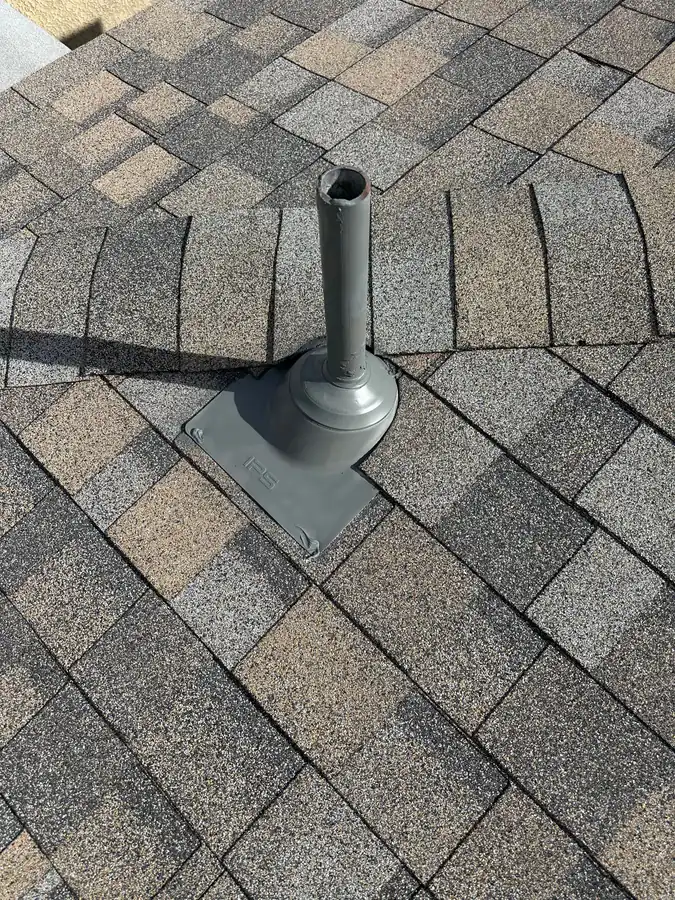
Why does a roof have pipes sticking out of it?
Pipes stick out of your roof because plumbing drains need air to flow smoothly, so vent pipes run from the drain lines up through the roof. Most homes have one to several plumbing vents, plus other round penetrations such as bathroom exhaust pipes, furnace or water heater flues, and radon mitigation pipes. Every one of them is a hole in the roof that must be sealed, and pipe boots are how that is done on most shingle roofs.
What types of pipe boots are there?
Pipe boots come in several common types: - Rubber-collar boots: a metal or plastic base with an EPDM or neoprene collar. These are the most common and least expensive. - All-plastic boots: a molded thermoplastic base and collar in one piece. - Lead boots: a soft lead sleeve formed over the top of the pipe. These are long-lasting and resist sun damage. - Split or retrofit boots: designed to wrap around a pipe without removing anything above the roof, used for repairs. - Hot-flue flashings: metal collars with a storm collar, used for gas appliance vents, which need clearance from combustibles rather than a rubber seal.
How is a pipe boot installed correctly?
A pipe boot must shed water like a shingle. The upper part of its base goes under the shingles above the pipe, and the lower part lies on top of the shingles below. The sides are tucked under the shingle courses beside it. The code requires flashing at roof penetrations installed to prevent moisture entry, following the manufacturer's instructions.[1] Fasteners go only where shingles will cover them. A boot laid on top of the shingles all the way around and sealed with caulk is a shortcut that eventually leaks.
How do you know if a pipe boot is leaking?
Pipe boot leaks often show up as a small, round ceiling stain a few feet from an interior wall, or dampness on the attic sheathing around the pipe. On the roof, look for a cracked or shrunken rubber collar, a gap between the collar and the pipe, rusted or exposed nails on the base, or boots that were set on top of the shingles. Inspection standards ask inspectors to report on roof penetrations along with other flashings.[2]
Do pipe boots get replaced with a new roof?
They should. Rubber collars often age faster than the shingles around them, and a replacement is the cheapest time to put in new boots because all the shingles around them are coming off anyway. Professional roofing guidance treats penetration flashings as part of the roof system.[3] A good bid lists the number of pipe boots and the type. Lead or premium rubber boots cost a little more but can match the life of the roof better.
Can animals damage pipe boots?
Yes. Squirrels sometimes chew rubber collars, and lead boots are a well-known target in some areas. If chewing is a problem where you live, ask about metal or plastic boots, or pipe-collar guards. Ask too whether the contractor will check that each vent is open and not blocked by debris or nests.
What should you ask about pipe boots in a roofing estimate?
Ask how many penetrations they counted, what boot type they will use for plumbing vents, how gas flues will be flashed, and whether the boots carry a warranty separate from the shingles. If your roof has a mix of pipes, such as a radon pipe or a wide flue, ask how each is handled.
Rather talk to someone? Request a callback
Leave your name and number and a local roofing contractor will call you back about a free estimate and inspection. Available to homeowners in our service markets.
- A local contractor calls you. They confirm your address and a time that works.
- They inspect your roof. Free, in person, no obligation.
- You get a written price. You decide. No pressure.
Frequently asked questions
How many pipe boots does a house have?
It varies, but many homes have between one and four plumbing vents plus appliance flues. Your roofer will count them.
Are lead pipe boots better?
Lead boots resist sun damage and can last a long time, but rubber boots are cheaper and easy to replace.
Can I caulk a cracked pipe boot?
Sealant may slow a leak temporarily, but replacing the boot is the real fix.
See 2026 roof replacement cost in your city →
Sources
- 2021 International Residential Code, Chapter 9: Roof Assemblies. codes.iccsafe.org/content/IRC2021P2/chapter-9-roof-assemblies
- InterNACHI: Home Inspection Standards of Practice. www.nachi.org/sop.htm
- National Roofing Contractors Association. www.nrca.net/
Sources checked November 4, 2026. Estimates are not quotes. Roofing, insurance, and legal details vary. Confirm with your contractor, insurer, or attorney.