What is a roof ridge?
Last updated · Roof anatomy
Short answer: The ridge is the horizontal peak where two sloping roof planes meet at the top of the roof. It is covered with ridge cap shingles or a metal ridge cap, and on many homes it also carries a ridge vent. As the highest, most wind-exposed line on the roof, it often shows storm damage first.[1]
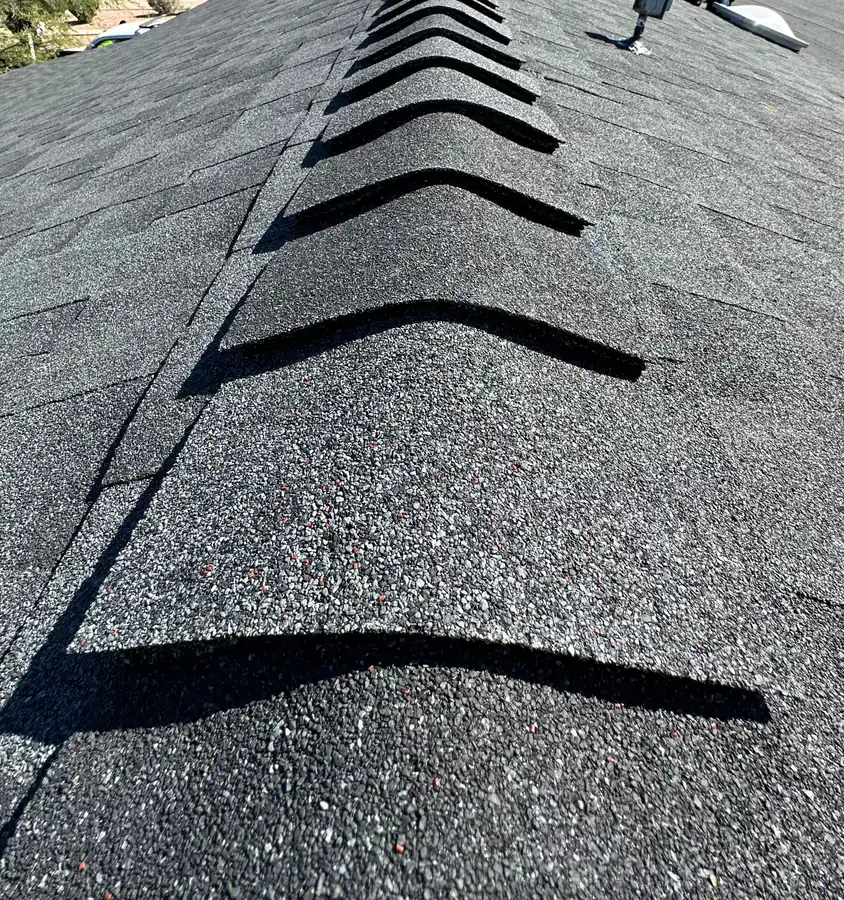
Where exactly is the ridge on a roof?
Picture a simple gable house from the street. The two roof planes slope up from the front and back walls and meet in a straight line at the top: that line is the ridge. On a hip roof, the main ridge is shorter and the sloped edges running down to the corners are called hips. Hips and ridges are covered the same way, so roofers often price them together as "hip and ridge" footage. Inside the attic, the framing member under the ridge may be a ridge board, which simply gives the rafters something to bear against, or a structural ridge beam that carries load on vaulted ceilings.
What covers the ridge on a shingle roof?
Ordinary field shingles cannot bend over the peak without cracking, so the ridge is capped with individual cap pieces. Many shingle lines sell dedicated hip-and-ridge shingles that are thicker and pre-bent; on cheaper jobs, crews cut 3-tab shingles into cap pieces. The residential code treats the cap as part of the roof covering, so it must meet the same fastening and wind-resistance rules as the rest of the shingles.[1] Ask which product will be used, because a roof's wind rating and warranty often assume the manufacturer's matching cap.
How does a ridge vent change the ridge?
When a ridge vent is installed, the deck is cut back on both sides of the peak and the vent sits over the gap, with cap shingles nailed over the vent. Air from the soffits exits there. Roofing manufacturers recommend continuous ridge exhaust paired with balanced soffit intake on most gable roofs and caution against mixing it with other exhaust types in the same attic.[2] If your attic has a powered fan or gable louvers plus a ridge vent, ask whether some of them should be closed off.
Why does the ridge get damaged in wind and hail?
Wind speeds up as it crosses the peak, creating strong suction on the cap shingles. Cap pieces that were nailed too high or too short, or that have become brittle with age, are the first to lift or tear off. Hail also hits the ridge squarely from many directions, so cracked or bruised cap pieces are a common sign that a storm caused damage. Home inspection standards list the roof covering, including ridges and hips, among the items an inspector observes and reports.[3] After a storm, look for missing cap pieces in the yard or gutters rather than climbing up.
What problems show up at the ridge as a roof ages?
- Cracked or split cap shingles, especially on the sunny side. - Exposed nail heads that rust and let water track down the shank. - A sagging ridge line, which can point to framing or decking problems and needs an inspection from inside the attic. - Daylight or water stains in the attic near the peak, often from a ridge vent slot cut too wide.
What should a reroof bid say about the ridge?
A clear bid lists the ridge and hip footage, names the cap product, and states whether a ridge vent is being added or replaced. If a ridge vent is included, the bid should describe how intake at the eaves will be provided. On tile roofs, the ridge is built differently, with mortar or a mechanically fastened ridge system over a nailer board, and the bid should say which method will be used. Ballpark pricing for ridge cap is usually folded into the per-square price, so the main thing to compare across bids is the product and the footage.
How can you check the ridge safely?
The safest check is from the ground: use binoculars, or ask for drone or contractor photos. A straight, even ridge line with no missing caps is a good sign. If the line dips, or caps are missing, call a roofer for an inspection rather than walking the roof yourself; the ridge is the most exposed place to stand.
Rather talk to someone? Request a callback
Leave your name and number and a local roofing contractor will call you back about a free estimate and inspection. Available to homeowners in our service markets.
- A local contractor calls you. They confirm your address and a time that works.
- They inspect your roof. Free, in person, no obligation.
- You get a written price. You decide. No pressure.
Frequently asked questions
Is the ridge the same as the peak?
Yes, in everyday use. Roofers say ridge for the horizontal line at the top and hip for the sloped lines that run down to the corners of a hip roof.
Can ridge cap shingles be replaced without a new roof?
Usually. A roofer can remove damaged caps and nail new ones, although matching the color of an older roof can be hard.
Do all roofs have a ridge?
Most sloped roofs do. Shed roofs, flat roofs, and pyramid hip roofs that meet at a single point do not have a ridge line.
See 2026 roof replacement cost in your city →
Sources
- 2021 International Residential Code, Chapter 9: Roof Assemblies. codes.iccsafe.org/content/IRC2021P2/chapter-9-roof-assemblies
- ARMA: Attic Ventilation Best Practices for Steep-Slope Asphalt Shingle Roofs. www.asphaltroofing.org/attic-ventilation-best-practices-steep-slope-asphalt-shin
- InterNACHI: Roof Inspection. www.nachi.org/roof-inspection.htm
Sources checked November 4, 2026. Estimates are not quotes. Roofing, insurance, and legal details vary. Confirm with your contractor, insurer, or attorney.