What is roof flashing?
Last updated · Roof anatomy
Short answer: Roof flashing is the metal or membrane that seals the joints and edges where the roof covering stops or changes direction: walls, chimneys, valleys, vents, skylights, and roof edges. Shingles shed water across the field of the roof, but flashing keeps water out at these breaks, which is where most roof leaks begin.[1]
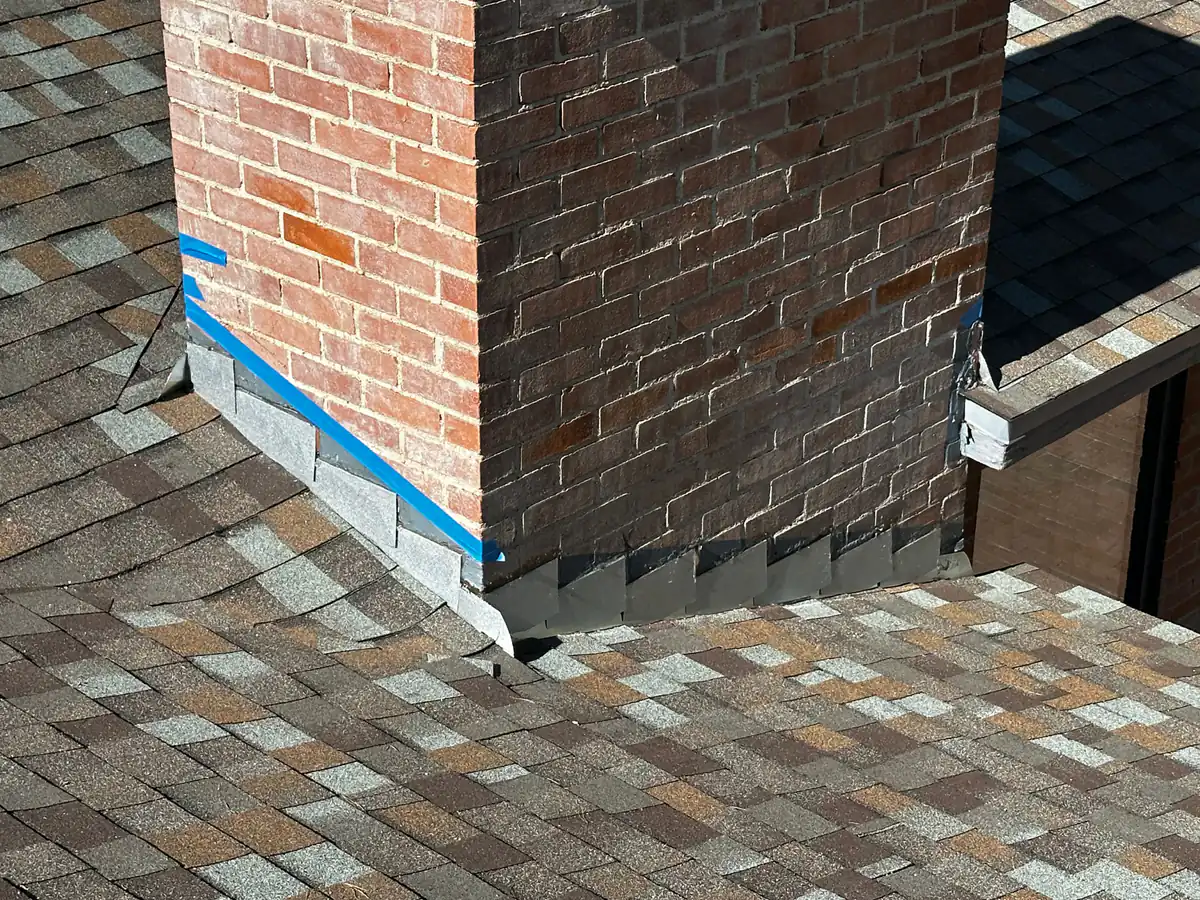
What are the main types of roof flashing?
Most roofs use several types of flashing: - Step flashing: L-shaped pieces woven in with each shingle course where a roof meets a sidewall. - Counterflashing: metal attached to a chimney or wall that laps over the base or step flashing. - Valley flashing or lining: metal or membrane under the valley where two roof planes meet. - Pipe and vent flashing: boots or collars that seal around plumbing vents and exhaust pipes. - Kickout flashing: a small diverter at the bottom of a roof-to-wall junction that sends water into the gutter. - Drip edge: edge metal at eaves and rakes. - Headwall (apron) flashing: covers the joint where the top of a roof plane meets a wall above it.
What materials is flashing made of?
Flashing is typically galvanized steel, aluminum, copper, or stainless steel, plus flexible membranes and rubber or plastic boots for pipes. The residential code requires metal flashing to be corrosion-resistant and sets a minimum thickness for sheet metal flashing, equivalent to 26-gauge galvanized steel.[1] Dissimilar metals, such as copper against aluminum, can corrode each other, so materials must be matched. Lead and copper are durable but cost more.
Why does roof flashing fail?
Flashing fails in predictable ways. Metal corrodes, sealant at the top of surface-mounted flashing dries and cracks, rubber pipe boots split in the sun, and fasteners loosen as the house moves. Just as often, flashing was installed wrong in the first place: step flashing cut as one long piece instead of steps, missing kickouts, or flashing laid on top of shingles and smeared with cement. Home inspection standards direct inspectors to inspect and report on roof flashings because they are a leading leak source.[2]
Should flashing be replaced during a roof replacement?
In most cases, flashing should be replaced during a roof replacement. New shingles change the heights and laps that the flashing must match, and old flashing often has nail holes and bends that will not reseal. Professional roofing guidance treats flashing as part of the roof system rather than an accessory.[3] Some contractors reuse sound counterflashing on chimneys or heavy copper valleys, which can be reasonable, but the bid should say what is being reused and why.
How can you spot flashing problems?
You can spot many flashing problems from the ground with binoculars: - Rust streaks or gaps around the chimney. - Thick globs of roofing cement around vents and walls, which usually mean earlier leak patches. - Cracked rubber around plumbing vent pipes. - Water staining on siding below a roof-to-wall corner, a classic missing-kickout sign. Inside, look for stains on ceilings near exterior walls, chimneys, and skylights.
What flashing work belongs in a roofing bid?
A good bid lists each flashing type: step flashing at walls, chimney counterflashing and cricket, valley lining, pipe boots by count, kickouts, skylight flashing kits, and drip edge. It should say whether each is new or reused and what material is used. Vague language such as "flashing as needed" makes it hard to compare bids and easy to cut corners.
What should you ask a roofer about flashing?
Ask how they flash each wall and chimney, whether they replace pipe boots and step flashing as standard, how they handle siding at roof-to-wall junctions, and whether they will photograph flashing before it is covered. A contractor who explains flashing clearly usually installs it carefully. Also ask what warranty covers flashing leaks, since some workmanship warranties exclude reused components, and how long the contractor stands behind leak repairs at walls and chimneys.
Rather talk to someone? Request a callback
Leave your name and number and a local roofing contractor will call you back about a free estimate and inspection. Available to homeowners in our service markets.
- A local contractor calls you. They confirm your address and a time that works.
- They inspect your roof. Free, in person, no obligation.
- You get a written price. You decide. No pressure.
Frequently asked questions
Can roof flashing be repaired without a new roof?
Yes. Chimney, pipe, and wall flashing can often be replaced locally by removing nearby shingles and reinstalling them.
How long does roof flashing last?
Metal flashing can outlast shingles, but sealants and rubber boots often fail sooner. Inspect them every few years.
Is roofing cement a substitute for flashing?
No. Cement can seal small gaps temporarily but does not replace properly lapped metal flashing.
See 2026 roof replacement cost in your city →
Sources
- 2021 International Residential Code, Chapter 9: Roof Assemblies. codes.iccsafe.org/content/IRC2021P2/chapter-9-roof-assemblies
- InterNACHI: Home Inspection Standards of Practice. www.nachi.org/sop.htm
- National Roofing Contractors Association. www.nrca.net/
Sources checked November 4, 2026. Estimates are not quotes. Roofing, insurance, and legal details vary. Confirm with your contractor, insurer, or attorney.