What is a roof rake?
Last updated · Roof anatomy
Short answer: The rake is the sloped edge of a roof at a gable end, running from the eave up to the ridge. It is trimmed with a rake board and drip edge, and on shingle roofs the code requires drip edge along the rake installed over the underlayment. Rakes catch strong wind suction, so starter strip and nailing details there matter.[1]
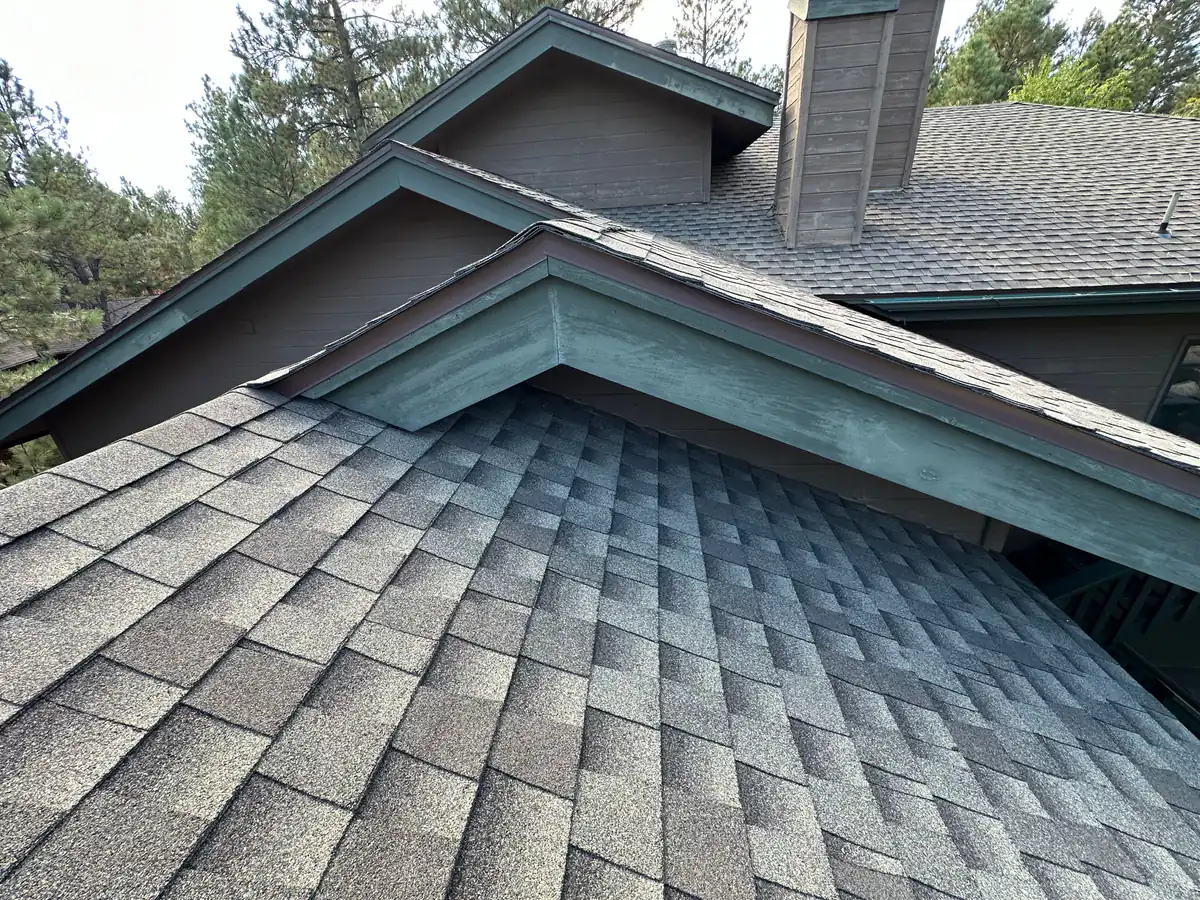
Where is the rake on a house?
Stand at the end of a gable house and look at the triangle of wall under the roof. The two slanted edges of the roof above that triangle are the rakes. Hip roofs have no rakes, because every edge slopes down to a horizontal eave. Dormers, porch gables, and garage gables all have their own short rakes, so a typical home has more rake footage than people expect.
How is a rake different from an eave?
Water drains off the eave, so the eave carries gutters and, in cold climates, ice barrier. Water runs alongside the rake rather than off it, so the main concerns at the rake are keeping wind-driven rain from getting under the edge shingles and keeping the edge from peeling up. The code reflects this difference: underlayment goes over the drip edge at eaves, but the drip edge goes over the underlayment at rakes.[1] Reversing those laps is a common installation mistake.
What protects the rake edge on a shingle roof?
- Drip edge: required at rakes by IRC Chapter 9, extending at least 1/4 inch below the sheathing and 2 inches onto the roof, fastened no more than 12 inches apart.[1] - Starter shingles at the rake: many manufacturers recommend or require a starter strip along rakes so the edge shingles have a sealant bond. - Correct overhang: shingles typically overhang the drip edge slightly so water drips clear, but not so far that wind can get under them. - Rake trim: on many homes a rake board or barge board finishes the gable edge below the drip edge.
Why do rakes fail in high winds?
Wind tunnel and field research shows that roof edges and corners see higher uplift than the middle of the roof, and the rake corners at the eave see some of the highest. Asphalt shingles are tested for wind resistance under standards such as ASTM D7158, which classifies shingles by the uplift they resist when sealed.[2] Those ratings assume the shingles are installed per the manufacturer's instructions, including edge details. The FORTIFIED Roof program from the Insurance Institute for Business and Home Safety calls for stronger edge details, such as sealed roof decks and drip edge fastened closer together, to keep wind from starting a failure at the edges.[3]
What does rake damage look like?
After a windstorm, look for shingles flipped back at the gable edges, missing pieces of drip edge, or bare underlayment showing near the corners. Missing rake shingles let rain blow sideways under the next course. Rotted rake boards and peeling paint along the gable trim usually mean water has been getting behind the drip edge for a while.
What should you ask a roofer about rake details?
Ask whether the bid includes new drip edge at the rakes (not just eaves), whether a starter strip will run up each rake, and how the crew will lap drip edge over the underlayment. In high-wind areas, ask whether they can add extra fasteners or a bead of roofing cement at rake edges as the shingle maker allows, and whether those details are needed for the wind warranty.
How much does rake work add to a roof price?
Drip edge and rake starter are usually small line items priced per lineal foot. Rake board replacement for rot is carpentry and is often priced separately. Because gable-heavy homes have more rake footage, two homes with the same roof area can have different trim costs, so make sure each bid lists the footage it is pricing.
Rather talk to someone? Request a callback
Leave your name and number and a local roofing contractor will call you back about a free estimate and inspection. Available to homeowners in our service markets.
- A local contractor calls you. They confirm your address and a time that works.
- They inspect your roof. Free, in person, no obligation.
- You get a written price. You decide. No pressure.
Frequently asked questions
Is a rake the same as a gable?
No. The gable is the triangular wall section. The rakes are the sloped roof edges above it.
Do rakes need gutters?
No. Water runs parallel to the rake and drains at the eave, where the gutter is.
Is rake drip edge required by code?
For asphalt shingle roofs under the IRC, yes. Drip edge is required at both eaves and rake edges.
See 2026 roof replacement cost in your city →
Sources
- 2021 International Residential Code, Chapter 9: Roof Assemblies. codes.iccsafe.org/content/IRC2021P2/chapter-9-roof-assemblies
- ASTM D7158: Wind Resistance of Asphalt Shingles (Uplift Force Method). store.astm.org/d7158_d7158m-20.html
- IBHS: FORTIFIED Roof Endorsements. fortifiedhome.org/fortified-roof-endorsements/
Sources checked November 4, 2026. Estimates are not quotes. Roofing, insurance, and legal details vary. Confirm with your contractor, insurer, or attorney.