When should you replace roof pipe boots?
Last updated · Maintenance
Short answer: Replace a roof pipe boot when its rubber collar is cracked, split, or pulling away from the pipe, when its base is rusted or lifted, or when you find a leak around the pipe. Plan on new boots whenever the roof is replaced. On an otherwise sound roof, a single boot can be swapped in about an hour.[2]
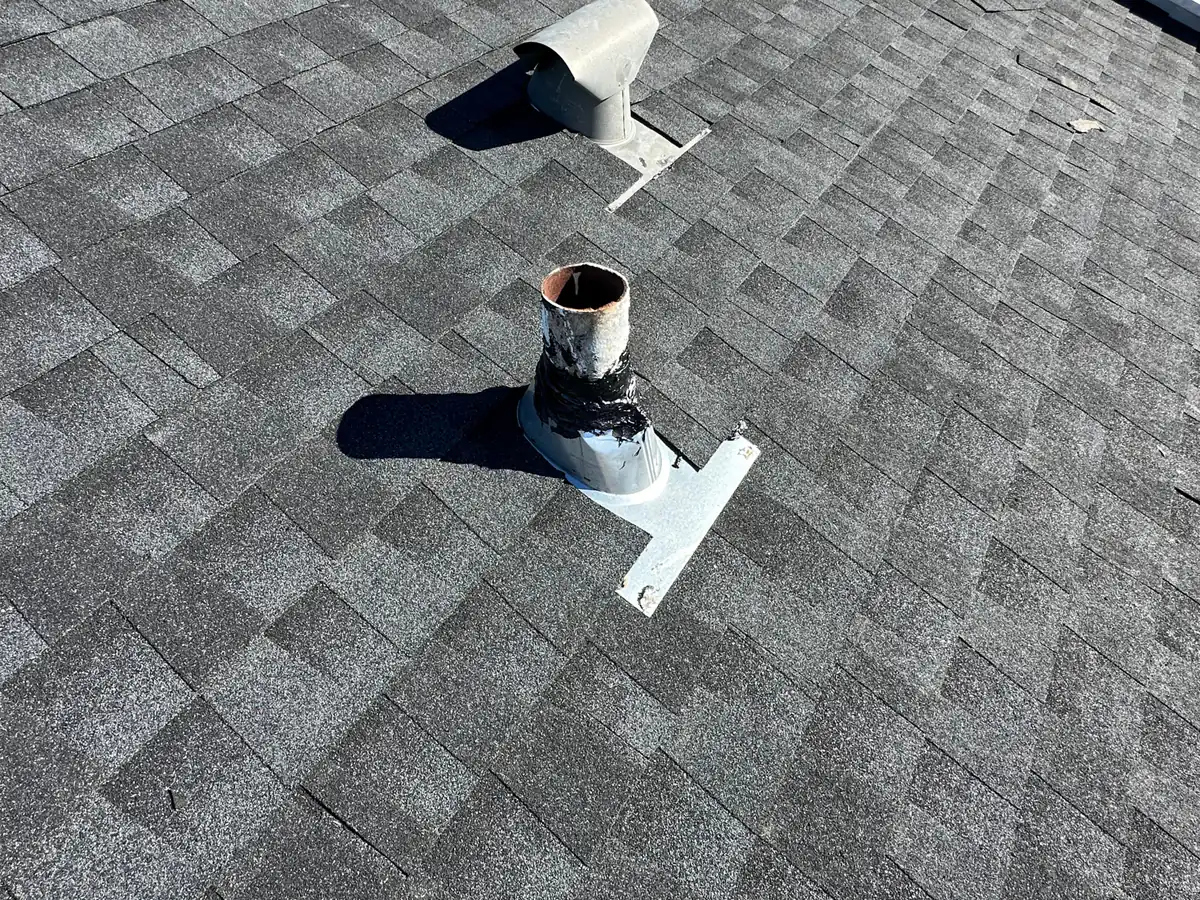
What are the warning signs a pipe boot is failing?
Rubber collars dry out under sunlight and heat, so the first warning signs appear at the top of the boot. Look for: - Fine cracks or a split seam in the collar. - A collar that has shrunk and left a gap around the pipe. - A base that is lifted, bent, or has exposed nails. - A ring of stains on the pipe below the collar. - Water spots on the ceiling or attic deck near the vent. From the ground, binoculars often show cracked collars clearly. In the attic, a flashlight on the pipe after rain can confirm a leak.
How long do pipe boots typically last?
Life varies with material, sun exposure, and climate. Rubber-collar boots tend to wear out before a long-life shingle roof does, while lead and some premium boots can last much longer. InterNACHI's life expectancy chart for home components is a useful reference for how long roofing parts generally last, but your boots' condition matters more than their age.[1] South- and west-facing boots in hot climates usually go first.
What does replacing a pipe boot involve?
To replace a pipe boot, a roofer lifts the shingles above and beside the pipe, breaks the sealant strips, removes the nails holding the old boot, and slides the new boot down over the pipe. The new base goes under the upper shingles and over the lower ones, as the code requires for penetration flashing.[3] The shingles are renailed and resealed. On steep or fragile roofs, the work takes more care, and on tile roofs the tiles around the pipe must be removed and reset.
What does pipe boot replacement typically cost?
Typical cost for a single pipe boot replacement is usually a small-repair charge, with most of the price covering the trip and setup rather than the part. Replacing several boots in one visit costs less per boot. Prices are higher for steep roofs, tile roofs, and lead boots. Ask for a written price per boot and whether the visit includes a quick check of other flashings while the roofer is up there.
Are retrofit collars a good fix?
Retrofit rubber collars slide over the pipe and sit on top of the old boot, sealing the cracked collar without disturbing the shingles. They are a reasonable quick fix when the base is still sound. They do not help if the base is rusted, lifted, or installed wrong, and they rely on a snug fit around the pipe. Treat them as a repair rather than a long-term replacement.
What if a new boot does not stop the leak?
Leaks near pipes are not always the boot. Water can come from a cracked pipe joint in the attic, condensation running down a cold vent pipe in winter, a nail pop or damaged shingle uphill, or a nearby flashing. Inspectors look at all roof penetrations and surrounding areas when tracking leaks.[2] If a new boot does not solve it, ask the roofer to check upslope and inside the attic before replacing more parts.
Should you replace pipe boots yourself?
Replacing a boot means working on the roof, breaking shingle seals, and renailing, which is risky on steep or wet roofs. If you are not comfortable on a ladder and roof, have a roofer do it. Read is it safe to walk on your roof before deciding, and keep the work to dry, mild days if you do it yourself.
Rather talk to someone? Request a callback
Leave your name and number and a local roofing contractor will call you back about a free estimate and inspection. Available to homeowners in our service markets.
- A local contractor calls you. They confirm your address and a time that works.
- They inspect your roof. Free, in person, no obligation.
- You get a written price. You decide. No pressure.
Frequently asked questions
Can I replace a pipe boot without a new roof?
Yes. A roofer can replace just the boot by lifting surrounding shingles and resealing them.
Why does my vent pipe drip only in winter?
Warm, moist air can condense inside a cold vent pipe or on its outside in the attic. That is not always a boot leak.
Should all pipe boots be replaced at once?
If they are the same age and one has failed, the others are often close behind. Replacing them together saves a second trip.
See 2026 roof replacement cost in your city →
Sources
- InterNACHI, Standard Estimated Life Expectancy Chart. www.nachi.org/life-expectancy.htm
- InterNACHI: Roof Inspection. www.nachi.org/roof-inspection.htm
- 2021 International Residential Code, Chapter 9: Roof Assemblies. codes.iccsafe.org/content/IRC2021P2/chapter-9-roof-assemblies
Sources checked November 4, 2026. Estimates are not quotes. Roofing, insurance, and legal details vary. Confirm with your contractor, insurer, or attorney.