What is a cricket on a roof?
Last updated · Roof anatomy
Short answer: A cricket, also called a saddle, is a small peaked structure built on the uphill side of a chimney or other wide roof penetration. It splits the water and debris flowing down the roof and sends it around the obstruction instead of letting it pool behind it. The residential code requires one behind penetrations wider than 30 inches.[1]
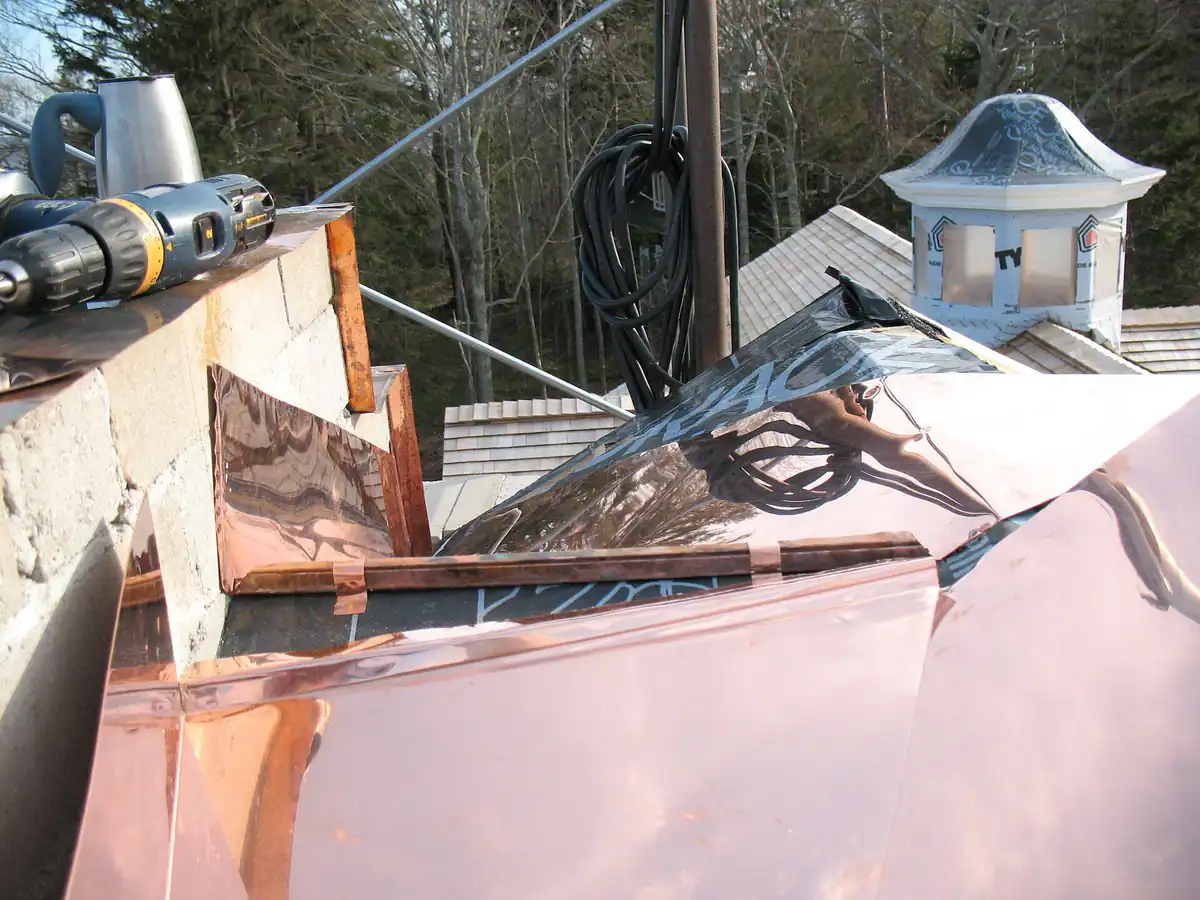
How does a roof cricket work?
Without a cricket, water and snow running down the roof hit the back of the chimney and stall there, forming a flat pocket where leaves collect and water sits against the flashing. A cricket is a miniature gable roof that slopes away in two directions, so water is diverted to each side and continues down the roof. It turns one bad flat spot into two small valleys that drain.
When does code require a cricket?
Section R903.2.2 of the International Residential Code requires a cricket or saddle on the ridge side of any chimney or penetration more than 30 inches wide, measured perpendicular to the roof slope. The cricket must be covered with sheet metal or the same material as the roof covering. Unit skylights installed and flashed per the manufacturer's instructions are an exception.[1] Narrower chimneys do not require a cricket by code, but many roofers recommend one anyway on wide-ish chimneys or in snowy climates.
How is a cricket built?
On a typical shingle roof, the roofer frames the cricket with wood blocking and plywood on top of the roof deck, matched to the roof slope so its peak meets the chimney at the right height. It is then covered with underlayment, often self-adhering membrane, and either shingled or covered with formed sheet metal. Where the cricket meets the chimney, it needs base flashing and counterflashing just like the rest of the chimney, and the two small valleys where it meets the main roof need valley lining. A cricket on a low-slope roof is often built with tapered insulation instead of framing.
What are signs a cricket is missing or failing?
A missing or failing cricket usually shows the same signs:
- Water stains on the ceiling or attic framing right in front of a chimney.
- Debris piling up on the uphill side of the chimney.
- Rusted or patched flashing behind the chimney, often smeared with sealant.
- In winter, a block of ice behind the chimney that lingers after the rest of the roof clears.
- Inspectors look carefully at chimney flashing because it is one of the most common leak points on a house.[2]
Should a cricket be added during a reroof?
If your chimney is wider than 30 inches and has no cricket, a full replacement is the natural time to add one, and the permit inspector may expect it. Even for narrower chimneys, adding a cricket costs relatively little when the roof is already open. Ask the roofer to price it separately so you can see the cost. A cricket also usually means the chimney's counterflashing has to be cut in or replaced at the new height, which may require a mason.
How much does a cricket add to a roof replacement?
What a cricket adds to a replacement depends on chimney width, roof pitch, and whether the cricket is shingled or metal-clad. A shingled cricket framed during a reroof is a modest line item; a custom metal cricket with new counterflashing cut into masonry costs more. Ask for a written price that includes framing, membrane, covering, and flashing so it is not a surprise change order.
What should you ask a roofer about your chimney?
Ask how wide the chimney is across the slope, whether a cricket is required or recommended, how the cricket will be covered, whether new counterflashing is included, and who will handle any masonry work. The National Roofing Contractors Association publishes detailing guidance that professional roofers follow for flashing and penetrations, and a good contractor should be able to explain theirs in plain terms.[3]
Rather talk to someone? Request a callback
Leave your name and number and a local roofing contractor will call you back about a free estimate and inspection. Available to homeowners in our service markets.
- A local contractor calls you. They confirm your address and a time that works.
- They inspect your roof. Free, in person, no obligation.
- You get a written price. You decide. No pressure.
Frequently asked questions
Is a cricket the same as a saddle?
Yes. Cricket and saddle are two names for the same diverter built behind a chimney or other wide penetration.
Do skylights need crickets?
Unit skylights flashed per the manufacturer's instructions are exempt from the code's cricket requirement. Very wide custom skylights may still need one.
Can a cricket be added without replacing the whole roof?
Yes. A roofer can remove shingles around the chimney, build the cricket, and reflash it.
See 2026 roof replacement cost in your city →
Sources
- 2021 International Residential Code, Chapter 9: Roof Assemblies. codes.iccsafe.org/content/IRC2021P2/chapter-9-roof-assemblies
- InterNACHI: Roof Inspection. www.nachi.org/roof-inspection.htm
- National Roofing Contractors Association. www.nrca.net/
Sources checked November 4, 2026. Estimates are not quotes. Roofing, insurance, and legal details vary. Confirm with your contractor, insurer, or attorney.