What is fascia on a roof?
Last updated · Roof anatomy
Short answer: Fascia is the vertical board that runs along the lower edge of the roof, fastened to the ends of the rafters or trusses. It closes off the roof edge, supports the gutters, and gives the drip edge something to lap over. Because it sits right where water leaves the roof, rotted fascia is a common discovery during a reroof.[1]
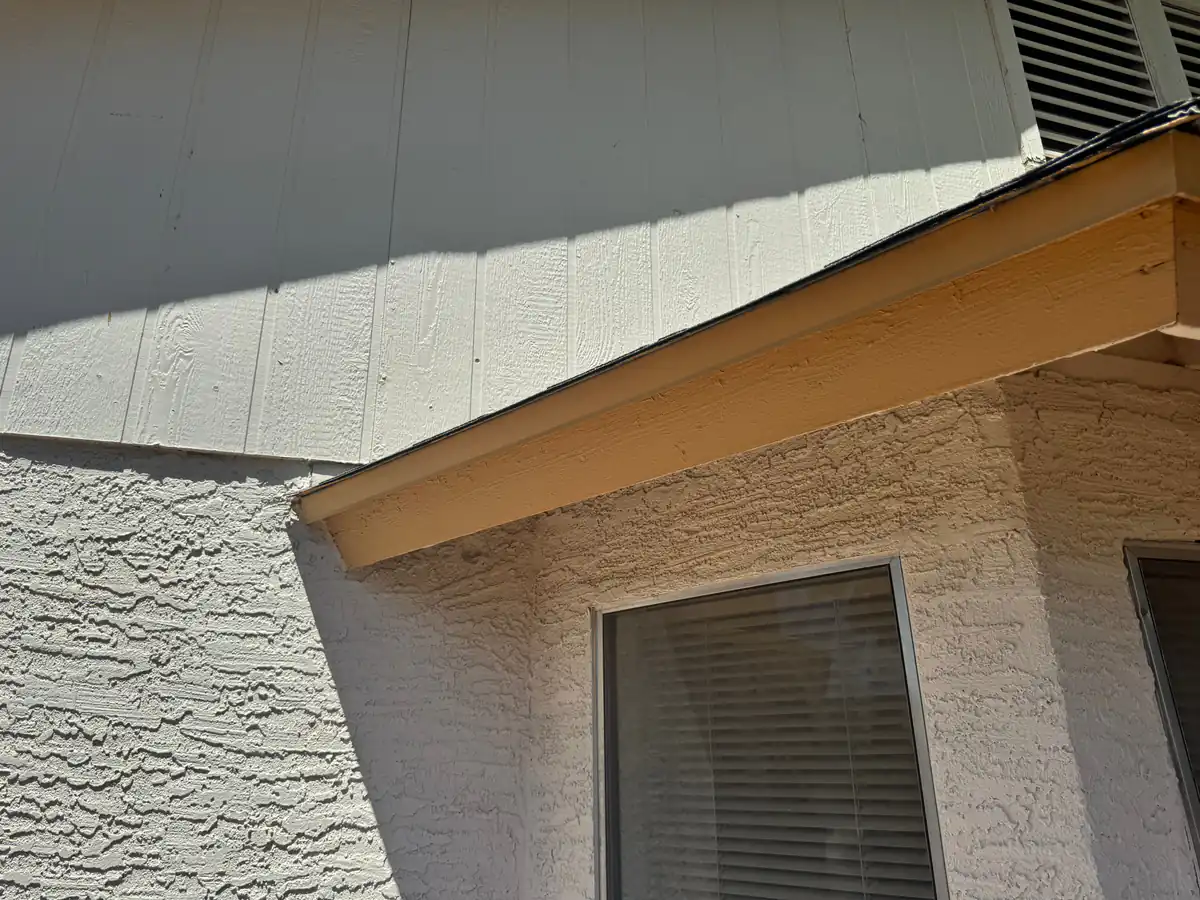
Where is the fascia, and what does it do?
The fascia is the board you see at the very edge of the roof, usually painted or wrapped in aluminum, with the gutter attached to it. Behind it are the rafter tails or truss ends; below it, the soffit runs back to the wall. Fascia does three jobs: it caps the ends of the framing so weather and animals stay out, it provides a solid backing for gutter hangers, and it forms a straight line that the drip edge and first course of shingles can follow.
How does fascia work with the drip edge?
The residential code requires drip edge at the eaves and rakes of asphalt shingle roofs. The metal must extend at least 1/4 inch below the roof sheathing and at least 2 inches back onto the roof, with fasteners no more than 12 inches apart.[1] The lower flange of the drip edge kicks water out past the fascia so it does not run down the face of the board and soak into the end grain. When drip edge is missing or installed behind the gutter incorrectly, water wicks into the top of the fascia and rot follows.
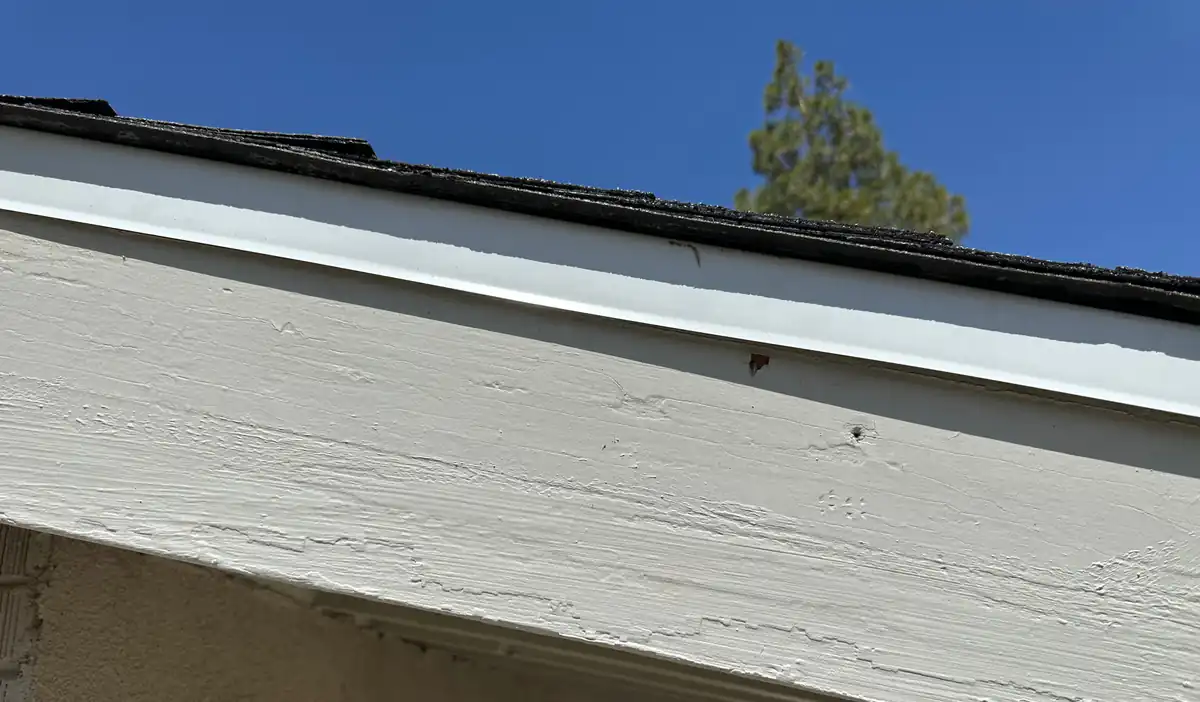
What are the signs of fascia rot?
Fascia rot usually announces itself with a few visible signs:
- Peeling paint, dark stains, or soft spots along the board.
- Gutters pulling away or sagging between hangers.
- Gaps at the corners where animals can get in.
- Mold or mildew along the board or the soffit below.
- Damp wood that stays wet supports mold growth; the EPA's guidance is to fix the water source first and then clean or replace damaged materials.[3]
How long does fascia last?
It depends on material and maintenance. Inspector life-expectancy charts give wood trim a much shorter life than aluminum or vinyl, and paint condition is the deciding factor for wood.[2] Fascia that is wrapped in aluminum can hide rot underneath, so press on it gently or ask the roofer to check it during tear-off when the edge is exposed.
Should damaged fascia be replaced or wrapped?
Wrapping rotted wood traps moisture and lets the decay continue out of sight, so the damaged section should be cut out and replaced first. After that, sound wood can be primed and painted or wrapped with aluminum coil. Composite and PVC fascia boards resist rot but cost more and expand with temperature, so joints must be detailed correctly. On many jobs, only a few sections near valleys and downspouts need replacement rather than the whole perimeter.
Who repairs fascia during a roof replacement?
Some roofing contractors handle fascia themselves; others subcontract it to a gutter or carpentry crew. Either way, the bid should say what happens if rot is found. A common approach is a unit price per lineal foot of fascia replacement, plus a separate price for removing and rehanging gutters. Typical prices vary widely by market and material, so compare the unit prices rather than assuming a lump sum covers it.
What should you ask about fascia before signing?
Ask whether the crew will inspect the fascia once the edge is open, how replacement is priced, whether the drip edge will lap correctly over the fascia and under the gutter apron, and who rehangs the gutters. Ask for photos of any rotted sections before they are replaced so you can see what you are paying for.
Rather talk to someone? Request a callback
Leave your name and number and a local roofing contractor will call you back about a free estimate and inspection. Available to homeowners in our service markets.
- A local contractor calls you. They confirm your address and a time that works.
- They inspect your roof. Free, in person, no obligation.
- You get a written price. You decide. No pressure.
Frequently asked questions
Is fascia the same as the gutter board?
Yes. Fascia is the board the gutter is fastened to, so people often call it the gutter board.
Can I replace fascia without a new roof?
Yes, but the roofer may need to lift the drip edge and first course of shingles to do it cleanly.
Why does fascia rot near downspouts and valleys?
Those spots carry the most water. Overflowing gutters and missing drip edge concentrate wetting there.
See 2026 roof replacement cost in your city →
Sources
- 2021 International Residential Code, Chapter 9: Roof Assemblies. codes.iccsafe.org/content/IRC2021P2/chapter-9-roof-assemblies
- InterNACHI, Standard Estimated Life Expectancy Chart. www.nachi.org/life-expectancy.htm
- U.S. EPA: A Brief Guide to Mold, Moisture, and Your Home. www.epa.gov/mold/brief-guide-mold-moisture-and-your-home
Sources checked November 4, 2026. Estimates are not quotes. Roofing, insurance, and legal details vary. Confirm with your contractor, insurer, or attorney.