Is it safe to walk on your roof?
Last updated · Roof & ladder safety
Short answer: Walking on a dry, low-pitched asphalt shingle roof can be done carefully, but it is risky on anything steeper than about 6:12, on wet, frosty, or mossy surfaces, and on tile, slate, wood shake, or metal. Most homeowners can learn what they need from the ground. A professional inspection removes the fall risk entirely.[2]
Why is walking on a roof riskier than it looks?
Walking on a roof feels manageable until you reach the edge. OSHA's fall prevention campaign notes that falls are the leading cause of death in construction, and workers six feet or more above a lower level are considered at risk of serious injury.[2] A one-story eave is usually higher than that. Professionals are required to use fall protection for residential roof work at that height, typically guardrails, safety nets, or personal fall arrest systems.[1] Homeowners are not under those rules, but the physics of a fall is the same.
How does roof pitch change the risk?
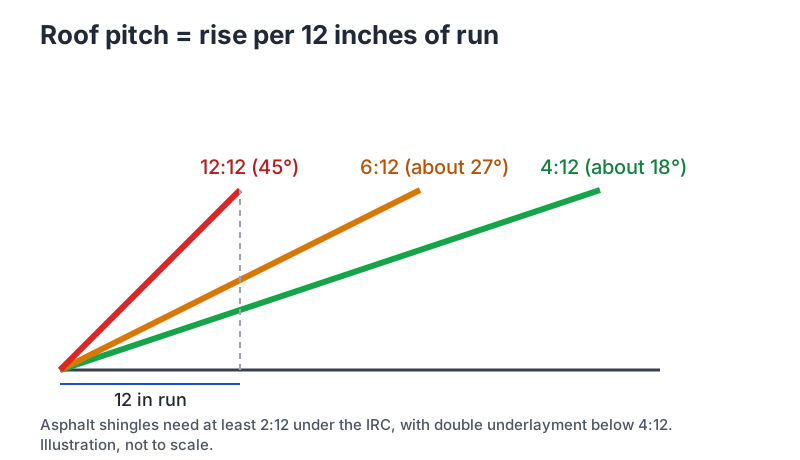
Pitch is the biggest factor that changes the risk. Low-slope roofs, roughly 4:12 and below, can be walked with care in good conditions. Moderate pitches up to about 6:12 get tiring and slippery fast, especially going downhill. On steeper roofs, even roofers rely on roof brackets, toe boards, and harnesses rather than footing alone. If you cannot comfortably stand upright without leaning into the slope, it is too steep to walk without fall protection. Check your pitch from the attic or with a phone app before deciding.
Which weather and surface conditions make a roof unsafe?
These weather and surface conditions turn an easy roof into a slick one: - Rain, dew, or melting frost, which can linger on shaded slopes until midday. - Moss, algae, pine needles, and leaves, which are slippery even when dry. - Loose granules on new shingles, which roll underfoot like ball bearings. - High heat, which softens asphalt shingles so they scuff and tear under your feet. - Gusty wind, which can push you off balance near edges. Early morning in cool seasons and the hottest afternoons in summer are the worst times.
Which roofing materials should you not walk on?
Several materials are fragile or slick. Clay and concrete tile can crack under a single misplaced step, and a cracked tile may not leak until the next storm. Slate breaks easily and is expensive to match. Wood shakes split and can be slippery when weathered. Metal panels are very slick, especially when wet or dusty, and can dent. Skylights are a special danger, because they are not designed to support a person; OSHA treats skylights as holes that need guarding or covers on work sites.[1] On these roofs, stay off and let a professional inspect.
How can you inspect your roof without climbing on it?
You can inspect a surprising amount without climbing onto the roof. Use binoculars or a phone with good zoom to look for missing shingles, lifted tabs, exposed nails, and damaged flashing. From a ladder at the eave, with proper setup and three points of contact, you can look across the roof and into the gutters for granules.[3] Check the attic with a flashlight for stains, daylight, or damp insulation. A drone gives an overhead view without anyone leaving the ground. See signs of hail damage on shingles for what to look for.
When should you call a professional instead?
Call a professional when the roof is steeper than you can stand on comfortably, uses tile, slate, shake, or metal, is wet or icy, or when you suspect storm damage. NIOSH notes that many ladder injuries happen at home, not just at work, and that individual ladder users rarely get safety training.[4] After a storm, it is also better not to scuff or crack anything that a contractor or adjuster may need to see. A free roof inspection puts a trained, equipped crew on the roof and gives you photos to review.
What if you have to go up anyway?
If you have to go up anyway, keep it brief and plan ahead. Pick a dry, mild, calm day, wear soft rubber-soled shoes, tell someone you are going up, and stay well back from edges. Step on the lower part of shingles, avoid valleys, and never step on a skylight. If anything feels unstable, come down. Read our ladder safety guide and roof safety gear for homeowners first.
Rather talk to someone? Request a callback
Leave your name and number and a local roofing contractor will call you back about a free estimate and inspection. Available to homeowners in our service markets.
- A local contractor calls you. They confirm your address and a time that works.
- They inspect your roof. Free, in person, no obligation.
- You get a written price. You decide. No pressure.
Frequently asked questions
Can walking on my roof damage it?
Yes. Tile, slate, and shakes crack easily, and soft shingles in hot weather can scuff and lose granules.
What roof pitch is too steep to walk on?
Many people find anything above about 6:12 unsafe without fall protection. If you cannot stand upright comfortably, stay off.
Should I check my roof myself after a hailstorm?
Start from the ground and the attic. A professional inspection is safer and creates photo documentation.
See 2026 roof replacement cost in your city →
Sources
- OSHA 29 CFR 1926.501: Duty to have fall protection. www.osha.gov/laws-regs/regulations/standardnumber/1926/1926.501
- OSHA Fall Prevention Campaign. www.osha.gov/stopfalls/residentialroofing.html
- OSHA Quick Card: Portable Ladder Safety. www.osha.gov/sites/default/files/publications/portable_ladder_qc.pdf
- CDC/NIOSH: Ladder Safety. www.cdc.gov/niosh/falls/ladder/index.html
Sources checked November 4, 2026. Estimates are not quotes. Roofing, insurance, and legal details vary. Confirm with your contractor, insurer, or attorney.