What shoes should you wear on a roof?
Last updated · Roof & ladder safety
Short answer: The best shoes for roof work have soft, flexible rubber soles with a fine tread that grips shingles without tearing them, a snug fit, and clean, dry soles. Avoid hard leather soles, deep lugs that trap grit, and worn-smooth treads. Good shoes improve traction but do not make a steep or wet roof safe.[1]
Why does footwear matter so much on a roof?
Footwear matters because your soles are the only thing holding you on a sloped surface. A ladder's rungs and a roof's granular surface both depend on grip, and OSHA's ladder guidance specifically calls for ladders and the surfaces you stand on to be free of slippery material.[1] Mud, sawdust, or wet grass on your shoes ends up on the rungs and the shingles. Before climbing, wipe your soles and look at the tread. If it is worn smooth, those are not roof shoes.
What sole material grips best on shingles?
Soft rubber grips best on asphalt shingles. Soft compounds conform to the granular surface and hold better than hard rubber or leather. Roofers often wear lightweight boots or shoes sold specifically for roofing, with gum-rubber or similar soft soles, but a pair of clean, flexible athletic shoes with good tread can also work for a short, careful look on a dry, low-pitched roof. The tradeoff is wear: soft soles wear out quickly on rough shingles, so check them often.
Which tread pattern should you look for?
Look for a fairly flat, fine tread pattern with lots of rubber in contact with the surface. Deep, widely spaced lugs, like those on hiking boots, put less rubber on the roof and pick up small stones and granules that act like marbles. They can also gouge softened shingles on a hot day. A flat sole also lets you feel the roof through your feet, which helps balance.
Do you need ankle support or safety toes?
Ankle support helps on uneven footing, so a mid-height boot with a soft sole is a good compromise for longer work. Safety toes protect against dropped objects and are common on job sites, where OSHA expects employers to assess hazards and provide personal protective equipment such as protective footwear when needed.[2] For a quick homeowner look, safety toes are not essential, but avoid stiff work boots whose rigid soles do not flex with the roof.
What shoes should you never wear on a roof?
Several kinds of shoes should never go on a roof: - Leather-soled dress shoes or cowboy boots. - Sandals, slides, or anything that can slip off your heel. - Worn-out sneakers with smooth patches. - Heavy-lug hiking or work boots full of trapped gravel. - Any shoe that is wet or muddy. Also avoid socks alone or bare feet; hot shingles and exposed nails can burn or cut.
Do roofing shoes make it safe to walk on any roof?
No. Footwear improves traction on a dry asphalt roof; it does not prevent a slide on frost, dew, moss, metal, or a steep pitch. NIOSH points out that individual ladder users often lack access to safety training and information, and that improper use, like overreaching, is a common cause of falls.[3] Shoes are one layer of protection. Pitch, weather, and fall protection matter more. If any of those are unfavorable, stay on the ground.
What else should you wear for a quick roof check?
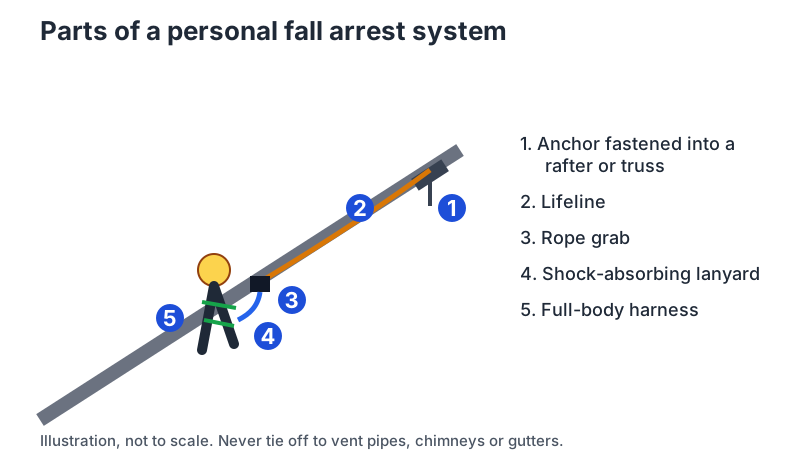
For a quick roof check, wear long pants and close-fitting clothes that will not snag on the ladder. Gloves with a grippy palm help on rough rungs and gutter edges, and sunglasses or safety glasses cut glare off shingles. See roof safety gear for homeowners for harnesses and anchors, and is it safe to walk on your roof before you decide to go up. Or skip the climb with a free roof inspection.
Rather talk to someone? Request a callback
Leave your name and number and a local roofing contractor will call you back about a free estimate and inspection. Available to homeowners in our service markets.
- A local contractor calls you. They confirm your address and a time that works.
- They inspect your roof. Free, in person, no obligation.
- You get a written price. You decide. No pressure.
Frequently asked questions
Are running shoes OK for walking on a roof?
Clean, flexible running shoes with good tread can work briefly on a dry, low-slope shingle roof. They are not suitable for steep, wet, or tile roofs.
Why do roofers wear special boots?
Roofing boots use soft rubber soles that grip shingles and flex with the roof while protecting against heat and nails.
How often should roofing shoes be replaced?
Replace them when the tread looks smooth or the sole hardens, which happens quickly on rough shingles.
See 2026 roof replacement cost in your city →
Sources
- OSHA Quick Card: Portable Ladder Safety. www.osha.gov/sites/default/files/publications/portable_ladder_qc.pdf
- OSHA: Personal Protective Equipment. www.osha.gov/personal-protective-equipment
- CDC/NIOSH: Ladder Safety. www.cdc.gov/niosh/falls/ladder/index.html
Sources checked November 4, 2026. Estimates are not quotes. Roofing, insurance, and legal details vary. Confirm with your contractor, insurer, or attorney.