Hail damage signs on asphalt shingles (with photos)
Last updated · Storm damage & insurance
Short answer: Hail damage on asphalt shingles usually shows up as random dark spots where granules were knocked off, soft bruises that give when pressed, and in worse cases cracked or torn shingle mats. Hits appear on the sides of the roof that faced the storm, and nearby gutters, vents, and screens often show matching dents.[1]
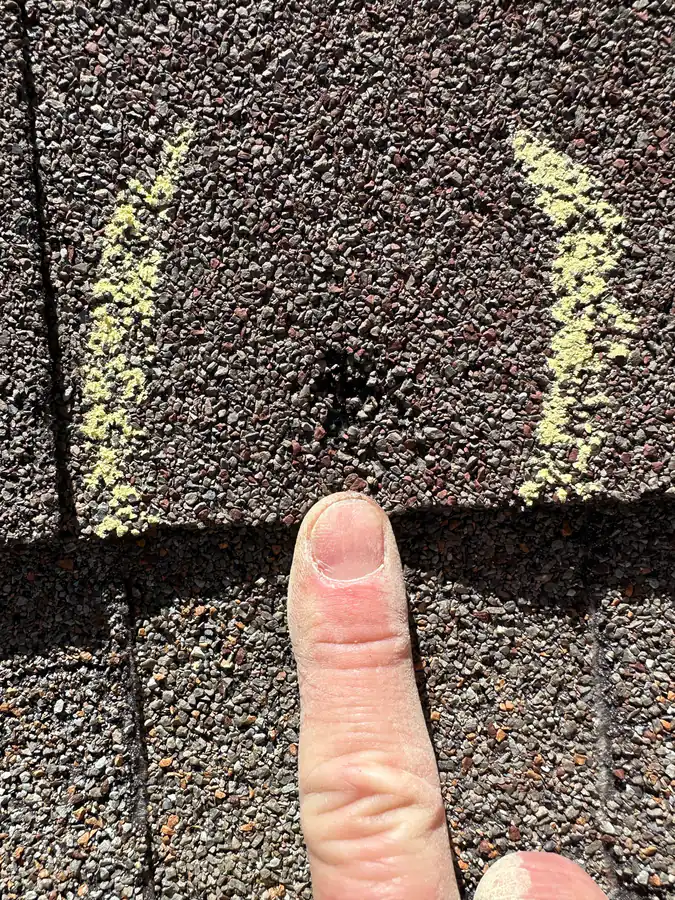
What does hail damage look like on asphalt shingles?
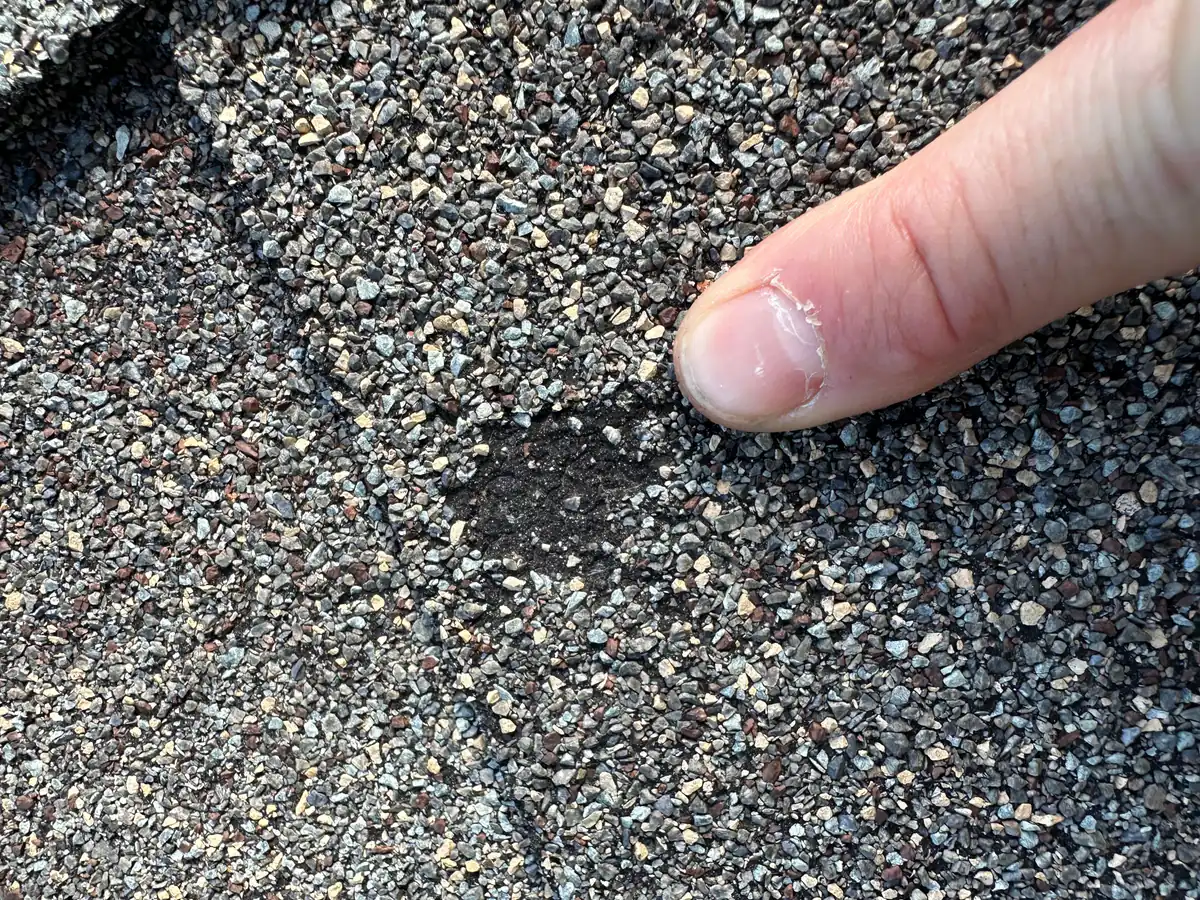
Hail damage on asphalt shingles looks like random, roughly round marks with no repeating pattern. A fresh hit knocks granules away and exposes black asphalt underneath, so it shows as a dark spot. A bruise feels soft or spongy when pressed, similar to a bruise on an apple, because the mat beneath has been fractured. Larger stones can crack the shingle or punch through it. In the photos on this page, an inspector has circled a hit in chalk so it shows up on camera.
How is hail damage different from normal wear?
Normal wear happens evenly. Granule loss from age is spread across the whole roof, and blistering from trapped moisture shows as small raised bubbles that pop and leave pits. Hail marks are scattered at random, are concentrated on the slopes facing the storm, and often sit next to dents in soft metals. Manufacturing defects, foot traffic, and mechanical damage from tools can look similar, which is why inspectors check several slopes and test squares before calling it hail.
Which hail sizes damage shingles?
Hail size matters, but it is only one factor. The National Weather Service treats hail of 1 inch or larger as severe, and storm reports from NOAA's Storm Prediction Center can show whether hail that size fell near your address on a given day.[3] Research by the Insurance Institute for Business & Home Safety shows that wind speed, stone density, shingle age, and temperature all change how much damage a stone does, so two similar roofs can fare differently in the same storm.[1]
What hail clues can you check from the ground?
You can check several hail clues from the ground without a ladder. Look for: - Dents or spatter marks on gutters, downspouts, and metal roof vents - Dings on the fins of an outdoor AC unit - Torn window screens or chipped paint on the side of the house facing the storm - Granules collecting at the ends of downspouts or in gutters - Dented mailboxes, car hoods, or patio furniture from the same day Write down the storm date and take photos with time stamps. Those notes help an inspector and, if you file a claim, help the insurer match damage to a date.
Why are dented vents and gutters important?
Dented vents and gutters are called collateral damage, and they help confirm that hail of a damaging size actually hit the house. Soft aluminum and thin steel dent at lower energy than shingles bruise, so dents alone do not prove the shingles are damaged. They do tell an inspector where to look and which direction the storm came from. Inspectors trained under InterNACHI's standards examine roof coverings, flashings, and penetrations for damage as part of a roof inspection.[2]
Can hail damage cause leaks right away?
Hail damage sometimes leaks right away, but often it does not. A bruise that fractures the mat may hold for months, then lose granules and crack through freeze-thaw cycles and sun exposure. That delay is why a roof can look fine after a storm and start leaking the next season. If you notice dents and granule loss after a storm, an inspection soon after gives you a record from when the damage was fresh.
Should you climb up and look yourself?
Climbing up to look yourself is risky, especially on a steep or wet roof. Ground checks and binoculars catch most clues, and a professional inspection covers the rest. If you do use a ladder, read our ladder safety guide and guide to walking on a roof first. A free inspection from a roofer avoids the climb entirely.
What happens after an inspection finds hail damage?
If an inspection finds hail damage, you will get photos and notes on which slopes are affected. From there you can decide whether to contact your insurer. Policies differ, and only the insurance company decides whether a loss is covered and how much it pays. Ask the roofer for a written summary, keep your storm photos together, and read your policy's deadline for reporting damage.
Rather talk to someone? Request a callback
Leave your name and number and a local roofing contractor will call you back about a free estimate and inspection. Available to homeowners in our service markets.
- A local contractor calls you. They confirm your address and a time that works.
- They inspect your roof. Free, in person, no obligation.
- You get a written price. You decide. No pressure.
Frequently asked questions
How soon after a hail storm should I check my roof?
As soon as it is safe. Fresh damage is easier to document, and many policies have time limits for reporting a loss.
Can hail damage be seen from the ground?
Some clues can, such as dented gutters, vents, and AC fins. Bruises on shingles usually need a close-up inspection.
Does hail always crack shingles?
No. Many hits leave bruises or granule loss without cracks. The mat can still be fractured underneath, which shortens the shingle's life.
See 2026 roof replacement cost in your city →
Sources
- IBHS, Hail research. ibhs.org/risk-research/hail/
- InterNACHI: Roof Inspection. www.nachi.org/roof-inspection.htm
- NOAA Storm Prediction Center, storm reports (preliminary). www.spc.noaa.gov/climo/reports/
Sources checked November 4, 2026. Estimates are not quotes. Roofing, insurance, and legal details vary. Confirm with your contractor, insurer, or attorney.