Synthetic vs felt roof underlayment
Last updated · Materials, warranties & lifespan
Short answer: Synthetic underlayment is a woven or spun polymer sheet that is lighter, stronger, and more tear-resistant than traditional asphalt-saturated felt, and can stay exposed longer. Felt costs less per roll and is familiar to inspectors. Both meet code when they comply with the listed standards, and neither replaces the self-adhering ice barrier at eaves where required.[1]
What does roof underlayment do?
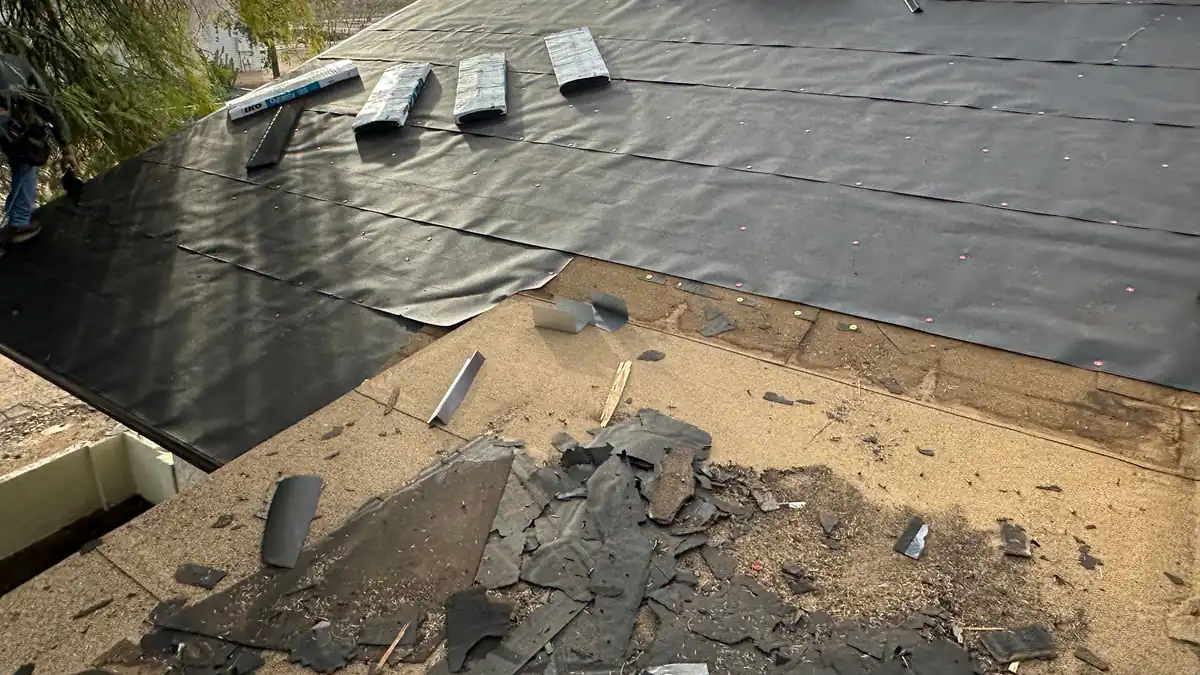
Underlayment is the secondary water barrier between the roof deck and the roof covering. It catches wind-driven rain that gets past shingles, protects the deck during installation, and separates the deck from the shingles. Shingles shed most water, but underlayment handles what gets through at laps, nail holes, and damaged areas.
What standards must underlayment meet?
The International Residential Code lists approved underlayment standards for asphalt shingle roofs.[1] Felt underlayment is typically made to ASTM D226, which covers asphalt-saturated organic felt in Type I (often called 15-pound) and Type II (30-pound) weights.[2] Synthetic underlayment is approved through its own standards and product evaluations, and its packaging should list them. Self-adhering ice barrier membrane is made to ASTM D1970.[3] Ask your contractor which standard the chosen product meets.
How do synthetic and felt underlayment compare?
Here is how synthetic and felt underlayment compare on the main points: - Tear resistance: synthetic resists tearing in wind and under foot traffic; felt can tear when wet or walked on. - Weight: a roll of synthetic covers far more area at a fraction of the weight, which is easier on crews. - Wrinkling: felt can wrinkle when it absorbs moisture, which may show through shingles; synthetic lies flat. - Exposure: many synthetics are rated to sit uncovered for weeks or months; felt should be covered quickly. - Traction: some synthetics are slick when wet or dusty, though most have textured walking surfaces. - Cost: felt usually costs less per square, though synthetic's labor savings narrow the gap.
Does synthetic underlayment need special fastening?
Synthetic underlayment usually requires cap nails or cap staples at spacing set by the manufacturer, not bare staples. In high-wind regions, the code also sets specific underlayment attachment rules, which typically call for cap fasteners at closer spacing.[1] Ask your contractor what fastener and spacing they will use and whether it matches the product's instructions.
Where is ice and water membrane still required?
In areas where ice dams are a known risk, the code requires an ice barrier of self-adhering membrane or two layers of cemented underlayment from the eave edge to at least 24 inches inside the exterior wall line.[1] Neither standard felt nor mechanically fastened synthetic replaces that. Membrane is also commonly used in valleys and around penetrations. On low-slope shingle roofs between 2:12 and 4:12, the code requires two layers of underlayment.
Should you pay extra for premium underlayment?
Paying extra for premium underlayment is often reasonable, because underlayment is a small part of a roof's total cost. Common upgrades include synthetic instead of felt, membrane in valleys and at penetrations, or full membrane coverage in hurricane zones where sealed-deck programs ask for it. Shingle makers may also require their own underlayment for enhanced warranties, so check what the warranty you are buying requires.
What should a bid say about underlayment?
A clear bid names the underlayment product and type, where membrane goes (eaves, valleys, around penetrations), how many feet up the eaves the ice barrier runs, and how it will be fastened. If two bids differ a lot in price, compare this line closely; it is an easy place to cut cost without the homeowner noticing.
Rather talk to someone? Request a callback
Leave your name and number and a local roofing contractor will call you back about a free estimate and inspection. Available to homeowners in our service markets.
- A local contractor calls you. They confirm your address and a time that works.
- They inspect your roof. Free, in person, no obligation.
- You get a written price. You decide. No pressure.
Frequently asked questions
Is 30-pound felt better than 15-pound felt?
Heavier felt is thicker and more durable, but both meet code when they comply with the listed standard. Synthetic outperforms both in tear resistance.
Can synthetic underlayment be left exposed?
For a limited time set by the manufacturer. Check the product's UV exposure rating.
Does underlayment affect my shingle warranty?
It can. Some enhanced warranties require the shingle maker's own underlayment and accessories.
See 2026 roof replacement cost in your city →
Sources
- 2021 International Residential Code, Chapter 9: Roof Assemblies. codes.iccsafe.org/content/IRC2021P2/chapter-9-roof-assemblies
- ASTM D226: Asphalt-Saturated Organic Felt Used in Roofing. store.astm.org/d0226_d0226m-17.html
- ASTM D1970: Self-Adhering Polymer Modified Bituminous Sheet for Ice Dam Protection. store.astm.org/d1970_d1970m-21.html
Sources checked November 4, 2026. Estimates are not quotes. Roofing, insurance, and legal details vary. Confirm with your contractor, insurer, or attorney.