Architectural vs 3-Tab shingles: Differences, lifespan, and wind ratings
Last updated · Materials, warranties & lifespan
Short answer: Architectural shingles are two layers of shingle laminated together, so they are thicker, heavier, and give a dimensional look. 3-tab shingles are a single flat layer cut into three even tabs. InterNACHI's life expectancy chart lists about 30 years for architectural and about 20 years for 3-tab, and architectural lines usually carry higher wind ratings.[1]
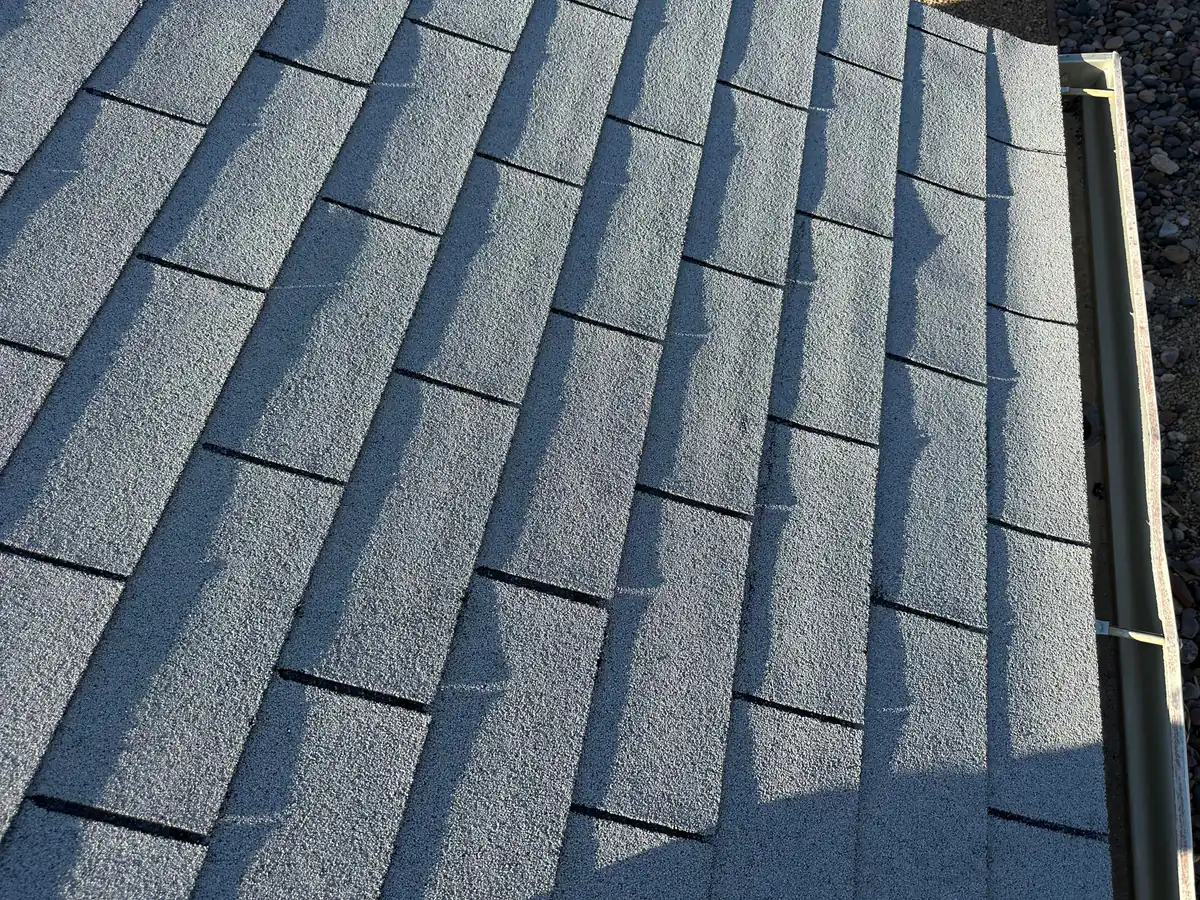
How are architectural and 3-tab shingles built differently?
Architectural and 3-tab shingles start from the same base: a fiberglass mat coated with asphalt and topped with mineral granules, made to the ASTM D3462 standard.[2] A 3-tab shingle is one layer, with two cutouts along the bottom edge that create three tabs of equal width. An architectural shingle, also sold as laminated or dimensional, bonds a second strip of material under the first. The bottom strip shows through irregular cutouts, which creates shadow lines and a thicker profile. The extra layer is why architectural shingles weigh more per bundle and per square.
What do they look like on a house?
A 3-tab roof looks flat and uniform, with a repeating grid of tabs and straight shadow lines. Architectural shingles look textured from the street because the tabs are staggered and vary in height, a little like wood shakes. The dimensional pattern also hides minor deck waves and small color differences better than a flat 3-tab does. The photos on this page compare the two: the flat grid of a 3-tab roof and the layered tabs of an architectural shingle.
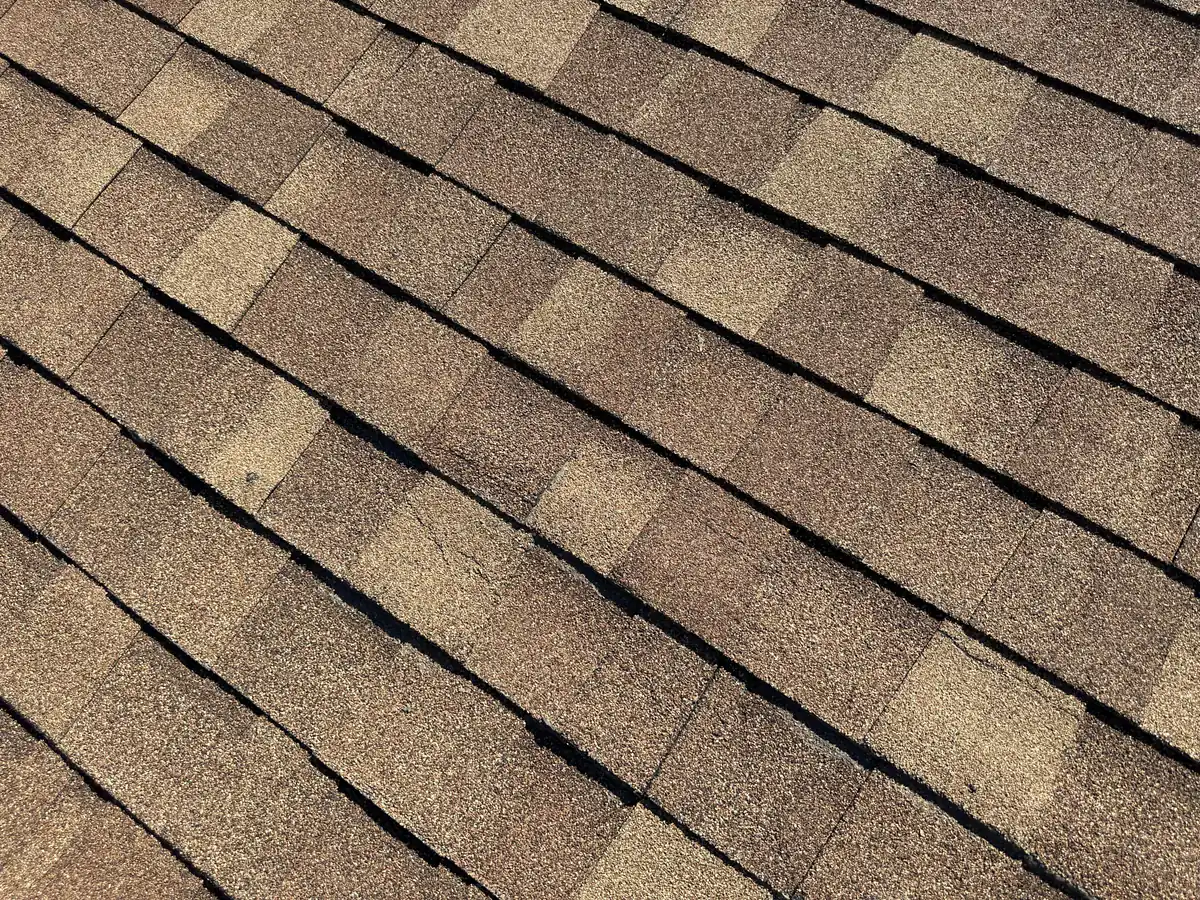
Which shingle handles wind better?
Wind resistance is measured by two lab tests. ASTM D3161 blows air across a test deck at set speeds, with Class A at 60 mph, Class D at 90 mph, and Class F at 110 mph.[3] ASTM D7158 measures uplift and rates shingles Class D, G, or H, with Class H the highest.[4] Many 3-tab products are rated at the lower classes, while most architectural lines are sold with Class F or Class H ratings. Real-world wind performance also depends on correct nail placement, a sealed starter course, and the adhesive strip bonding in warm weather.
How long does each type last?
How long each type lasts is best estimated from InterNACHI, the home inspector association, which publishes typical service lives for home components. Its chart lists about 20 years for 3-tab asphalt shingles and about 30 years for architectural shingles.[1] Those are averages, not promises. Attic ventilation, sun exposure, color, hail, and installation quality can shorten or stretch either number. A manufacturer's warranty term, such as "lifetime," is a warranty term and not a forecast of how long the roof will stay watertight.
Which one costs more?
Architectural shingles usually cost more per square than 3-tab because they contain more material and weigh more. The gap on a full job is often smaller than people expect, since tear-off, underlayment, flashing, ventilation, and labor make up much of the price and stay about the same either way. Some suppliers now stock few 3-tab colors, because demand has shifted to laminated shingles, and that can narrow the price difference further or limit color choice.
When does 3-tab still make sense?
A 3-tab shingle can still make sense on a detached garage or shed, on a rental where the budget is tight, or when you need to patch an existing 3-tab roof and want the repair to match. Even then, matching an older 3-tab roof can be hard because colors and dimensions change over the years. Some 3-tab shingles are metric-sized and some are English-sized, and mixing them on one roof plane leaves visible steps.
Can you mix architectural and 3-tab on the same house?
Mixing architectural and 3-tab on one roof plane looks uneven and is rarely recommended. On separate roof sections, such as a porch roof, it is possible, though the look will differ. One spot where 3-tab-style pieces show up on almost every architectural roof is the starter course and hip and ridge caps. Many roofers cut caps from 3-tab shingles or use the manufacturer's matching cap product.
What should a bid list for shingles?
A clear bid names the shingle type, product line, color, and the wind classification on the package. It should also list the starter strip, hip and ridge cap product, nails per shingle, and underlayment. If you live in a hail area, ask whether an impact-rated version is available. If two bids quote different shingle lines, compare the wind class, weight per square, and warranty terms rather than the marketing name.
Rather talk to someone? Request a callback
Leave your name and number and a local roofing contractor will call you back about a free estimate and inspection. Available to homeowners in our service markets.
- A local contractor calls you. They confirm your address and a time that works.
- They inspect your roof. Free, in person, no obligation.
- You get a written price. You decide. No pressure.
Frequently asked questions
Are architectural shingles worth the extra cost?
For most homes, yes. They usually last longer, carry higher wind ratings, and the price gap on a full re-roof is often modest.
Can I put architectural shingles over my old 3-tab roof?
Code allows one re-cover over a single existing layer in many areas, but it is not allowed in some hail-prone areas and many roofers recommend a tear-off so the deck can be checked.
Do architectural shingles weigh more?
Yes. The second laminated layer makes them heavier per square than 3-tab shingles, which is one reason they resist wind uplift better.
See 2026 roof replacement cost in your city →
Sources
- InterNACHI, Standard Estimated Life Expectancy Chart. www.nachi.org/life-expectancy.htm
- ASTM D3462: Asphalt Shingles Made from Glass Felt. store.astm.org/d3462_d3462m-19.html
- ASTM D3161: Wind Resistance of Asphalt Shingles (Fan-Induced Method). store.astm.org/d3161_d3161m-20.html
- ASTM D7158: Wind Resistance of Asphalt Shingles (Uplift Force Method). store.astm.org/d7158_d7158m-20.html
Sources checked November 4, 2026. Estimates are not quotes. Roofing, insurance, and legal details vary. Confirm with your contractor, insurer, or attorney.