Skylights and reroofing: Replace, reflash, or remove?
Last updated · Costs & the replacement process
Short answer: A roof replacement is the best time to deal with skylights. Most roofers recommend at least new flashing, and replacing older or leaking skylights at the same time avoids tearing into a new roof later. If you no longer want a skylight, it can be removed and the opening framed and roofed over during the job.[2]
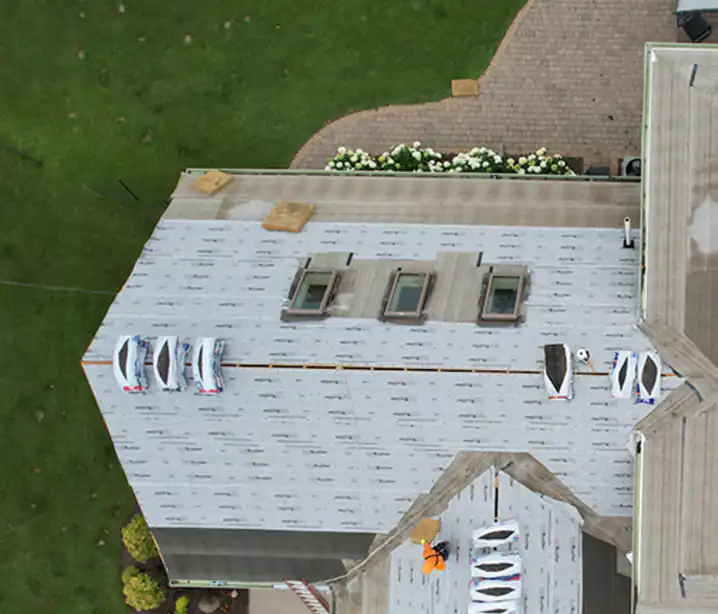
Should you replace skylights when you replace the roof?
You should consider replacing skylights when you replace the roof, especially if they are older, fogged, cracked, or have leaked. Removing a skylight later means cutting into new shingles and flashing. Even a skylight in good shape needs new flashing during a reroof, because old flashing rarely matches the new roof and is easy to damage when removed. Skylight manufacturers publish installation steps that assume new flashing with a new install.[2]
What is the difference between curb-mounted and deck-mounted skylights?
Curb-mounted and deck-mounted skylights differ in how they sit on the roof. A curb-mounted skylight sits on a raised wood frame (the curb) built on the roof, and the skylight fits over it. A deck-mounted skylight attaches directly to the roof deck with its own flashing kit. Deck-mounted units are common on new residential installs and have a lower profile. When replacing, a roofer may switch types, which can change the opening size and interior finish work.
What flashing does a skylight need?
A skylight needs flashing on all four sides. Most systems use step flashing along the sides woven with each shingle course, a head flashing at the top, and a sill or apron flashing at the bottom. Many installs add a self-adhering underlayment collar around the opening. The building code requires flashing at roof openings and wall intersections to prevent leaks.[3] Ask whether the roofer will use the skylight maker's flashing kit.
What glazing does code require for skylights?
Code sets glazing rules for skylights for safety. The International Residential Code's section on skylights and sloped glazing lists acceptable glazing types, such as laminated glass and certain tempered glass with screens, so broken glass is less likely to fall into the room.[1] Replacement skylights bought from building suppliers are generally made to meet these rules. Your building department may inspect skylight work as part of the reroof permit.
Should you remove a skylight you no longer want?
You can remove a skylight you no longer want during a reroof. The roofer removes the unit, frames the opening, installs decking, and roofs over it with the rest of the roof. Inside, the ceiling opening and light shaft need drywall and paint, which may be a separate trade. Removing a skylight can solve chronic leaks and heat gain, but you lose daylight. A tubular skylight is a smaller alternative.
How do skylights affect energy use?
Skylights affect energy use by letting in light and heat. Older skylights with single-pane or clear glass can add summer heat and lose heat in winter. Newer units often have low-E coatings, insulated glass, and optional shades. If comfort is a concern, ask about glazing options and whether the skylight is rated by the National Fenestration Rating Council for U-factor and solar heat gain.
What should the roofing contract say about skylights?
The roofing contract should say exactly what happens to each skylight: reflash only, replace with a named model and size, or remove and roof over. It should note who supplies the skylight, whether interior finish work is included, and what warranty covers the skylight and the flashing. Without this, skylight work is a common source of change orders and disputes.
How do you spot a leaking skylight?
You spot a leaking skylight by looking for water stains on the ceiling or light shaft around the skylight, drips during rain, peeling paint, or mold. Condensation can look like a leak; it shows up on cold days as water on the inside glass. A roofer can tell the difference by checking the flashing and the seal. If you see leaks, schedule a free inspection before the damage spreads.
Rather talk to someone? Request a callback
Leave your name and number and a local roofing contractor will call you back about a free estimate and inspection. Available to homeowners in our service markets.
- A local contractor calls you. They confirm your address and a time that works.
- They inspect your roof. Free, in person, no obligation.
- You get a written price. You decide. No pressure.
Frequently asked questions
Can I keep my old skylight during a reroof?
Often yes, if it is in good shape, but it should get new flashing. Older units are worth replacing at the same time.
Does replacing a skylight need a permit?
Often, as part of the reroof permit. Check with your building department.
Why is my skylight wet inside on cold mornings?
That is often condensation, not a leak. A roofer can check the flashing to rule out a leak.
See 2026 roof replacement cost in your city →
Sources
- 2021 International Residential Code, Chapter 3: Building Planning. codes.iccsafe.org/content/IRC2021P2/chapter-3-building-planning
- VELUX USA: Skylight Installation Process. www.veluxusa.com/installation-process
- 2021 International Residential Code, Chapter 9: Roof Assemblies. codes.iccsafe.org/content/IRC2021P2/chapter-9-roof-assemblies
Sources checked November 4, 2026. Estimates are not quotes. Roofing, insurance, and legal details vary. Confirm with your contractor, insurer, or attorney.