Roof, attic insulation, and R-Value: How they work together
Last updated · Energy & ventilation
Short answer: R-value measures how well insulation resists heat flow, and higher numbers insulate better. The 2021 energy code calls for about R-30 of ceiling insulation in the hottest zone, R-49 in zones 2 and 3, and R-60 in zones 4 through 8. Attic insulation works with roof ventilation and air sealing to keep the house comfortable.[1]
What does R-value mean?
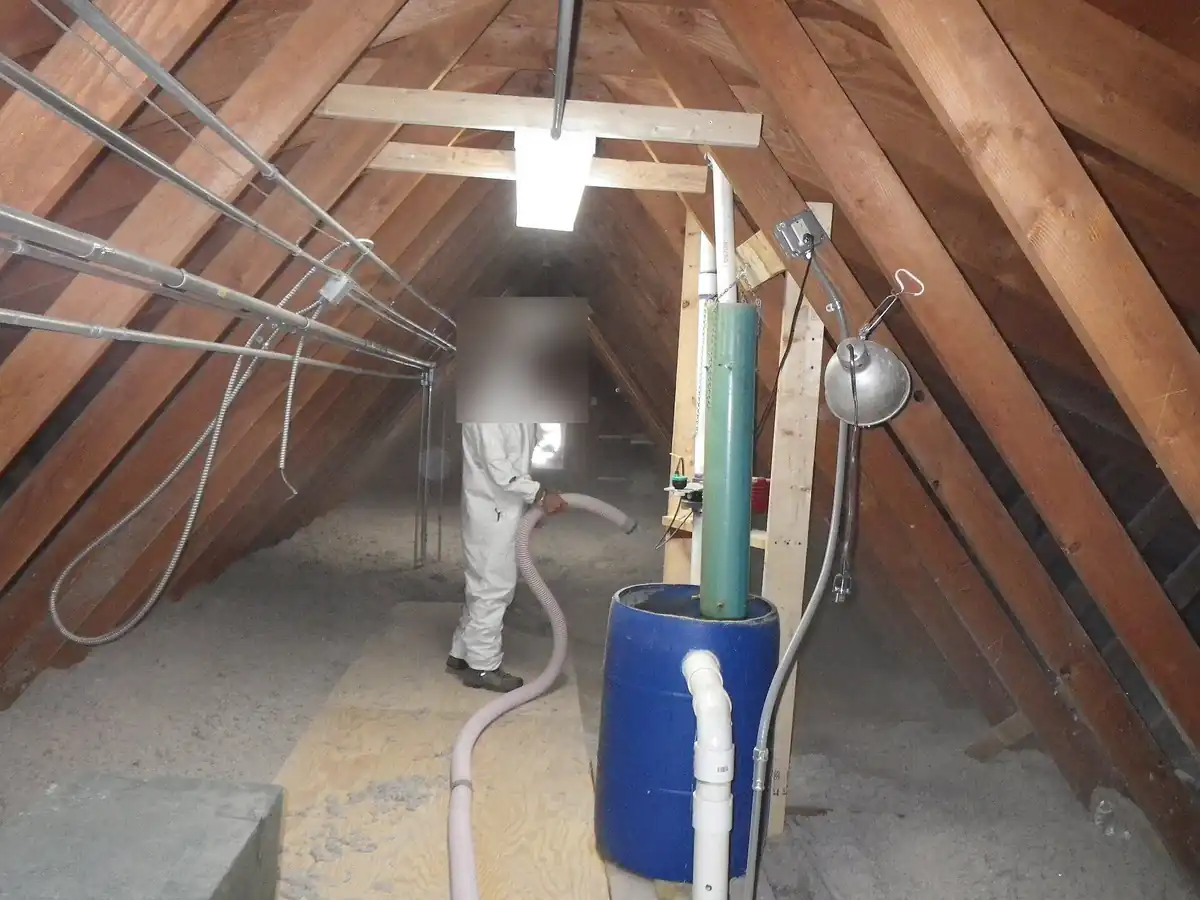
R-value is a measure of how well a material resists heat flowing through it. The higher the R-value, the better it insulates. The U.S. Department of Energy's Energy Saver guide explains that R-value depends on the type of insulation, its thickness, and its density, and that installing it correctly matters as much as the number on the bag.[4] Compressed or gappy insulation delivers less than its rated R-value.
How much attic insulation does code require?
How much attic insulation code requires depends on your climate zone. The 2021 International Energy Conservation Code sets minimum ceiling insulation of R-30 in climate zone 1, R-49 in zones 2 and 3, and R-60 in zones 4 through 8 for new construction.[1] Your state or city may have adopted an older or amended edition. Existing homes are not required to upgrade, but the code levels are a good target when you add insulation.
What does ENERGY STAR recommend?
ENERGY STAR publishes recommended attic insulation levels by climate zone for existing homes, with ranges for uninsulated attics and for attics that already have some insulation.[2] It suggests measuring the depth of what you have now and comparing it to the recommendation. As a rough check, if your attic insulation is level with or below the top of the floor joists, you probably have room to add more.
Why seal air leaks before adding insulation?
Air leaks should be sealed before adding insulation because fiberglass and cellulose do not stop air movement. Warm, moist air rising through gaps around light fixtures, wiring holes, and the attic hatch carries heat and moisture into the attic. ENERGY STAR recommends sealing these leaks first, then insulating over them.[3] Air sealing also reduces the moisture that can condense on the underside of the roof deck in winter.
How does insulation interact with roof ventilation?
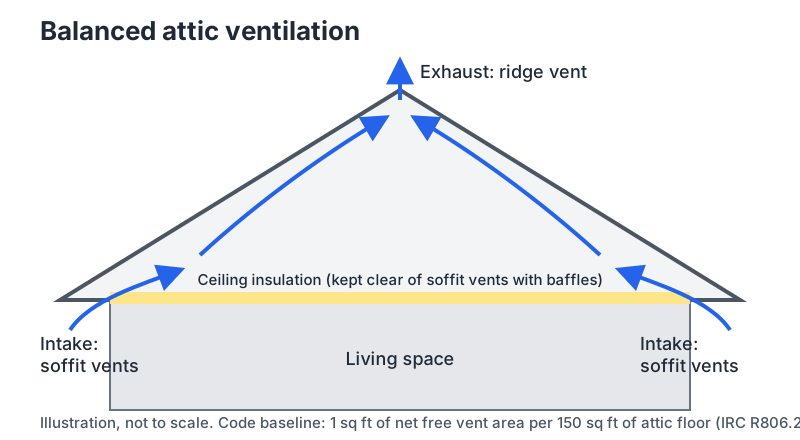
Insulation and roof ventilation work as a pair in a vented attic. Insulation on the attic floor keeps heat in the living space, so the attic stays close to outdoor temperature. Ventilation then flushes out heat and moisture that do get into the attic. When insulation is piled into the eaves, it can block soffit vents and stop intake air. Baffles at each rafter bay keep a clear channel from the soffit to the attic. The diagram on this page shows that airflow path.
What about unvented attics and cathedral ceilings?
Unvented attics and cathedral ceilings put the insulation at the roof line instead of the attic floor. Closed-cell or open-cell spray foam, or rigid foam above the deck, are common approaches. These assemblies follow specific code rules, including requirements to control condensation, so they should be designed carefully. They can be a good fit when ducts and equipment are in the attic, since they bring that space inside the conditioned envelope.
When should you upgrade insulation during a reroof?
A reroof is a good time to think about insulation, even though most attic insulation is added from inside. If the deck is being replaced, it is the easiest time to add baffles at the eaves, fix ventilation, and seal around penetrations from above. If you plan rigid foam above the deck on a low-slope or cathedral roof, it must be planned with the roofing. Ask your roofer to coordinate with an insulation contractor if the attic needs work.
How do you know if your attic needs more insulation?
Signs your attic needs more insulation include: - Insulation at or below the top of the ceiling joists - Upstairs rooms that are much hotter in summer or colder in winter - Ice dams and large icicles in snowy climates - High heating or cooling bills compared with similar homes - Visible gaps, compressed spots, or bare areas in the attic An energy auditor can measure air leakage and recommend a plan.
Rather talk to someone? Request a callback
Leave your name and number and a local roofing contractor will call you back about a free estimate and inspection. Available to homeowners in our service markets.
- A local contractor calls you. They confirm your address and a time that works.
- They inspect your roof. Free, in person, no obligation.
- You get a written price. You decide. No pressure.
Frequently asked questions
What R-value should my attic have?
It depends on climate zone. The 2021 IECC calls for R-30 in zone 1, R-49 in zones 2 and 3, and R-60 in zones 4 to 8.
Can I add new insulation over old insulation?
Usually yes, if the old insulation is dry and not moldy. Seal air leaks first.
Does more insulation mean less ventilation?
No. A vented attic needs both. Keep insulation clear of soffit vents with baffles.
See 2026 roof replacement cost in your city →
Sources
- 2021 International Energy Conservation Code. codes.iccsafe.org/content/IECC2021P2
- ENERGY STAR: Recommended Home Insulation R-Values. www.energystar.gov/saveathome/seal_insulate/identify-problems-you-want-fix/diy-c
- ENERGY STAR: Seal and Insulate. www.energystar.gov/saveathome/seal_insulate
- U.S. Department of Energy: Energy Saver Guide (PDF). www.energy.gov/sites/default/files/2022-08/energy-saver-guide-2022.pdf
Sources checked November 4, 2026. Estimates are not quotes. Roofing, insurance, and legal details vary. Confirm with your contractor, insurer, or attorney.