What is a cool roof?
Last updated · Energy & ventilation
Short answer: A cool roof reflects more sunlight and sheds absorbed heat faster than a standard roof, so it stays cooler in the sun. Coolness is measured by solar reflectance and thermal emittance, both on a 0 to 1 scale. The U.S. Department of Energy says a cool roof can lower roof surface temperature by up to 50°F.[2]
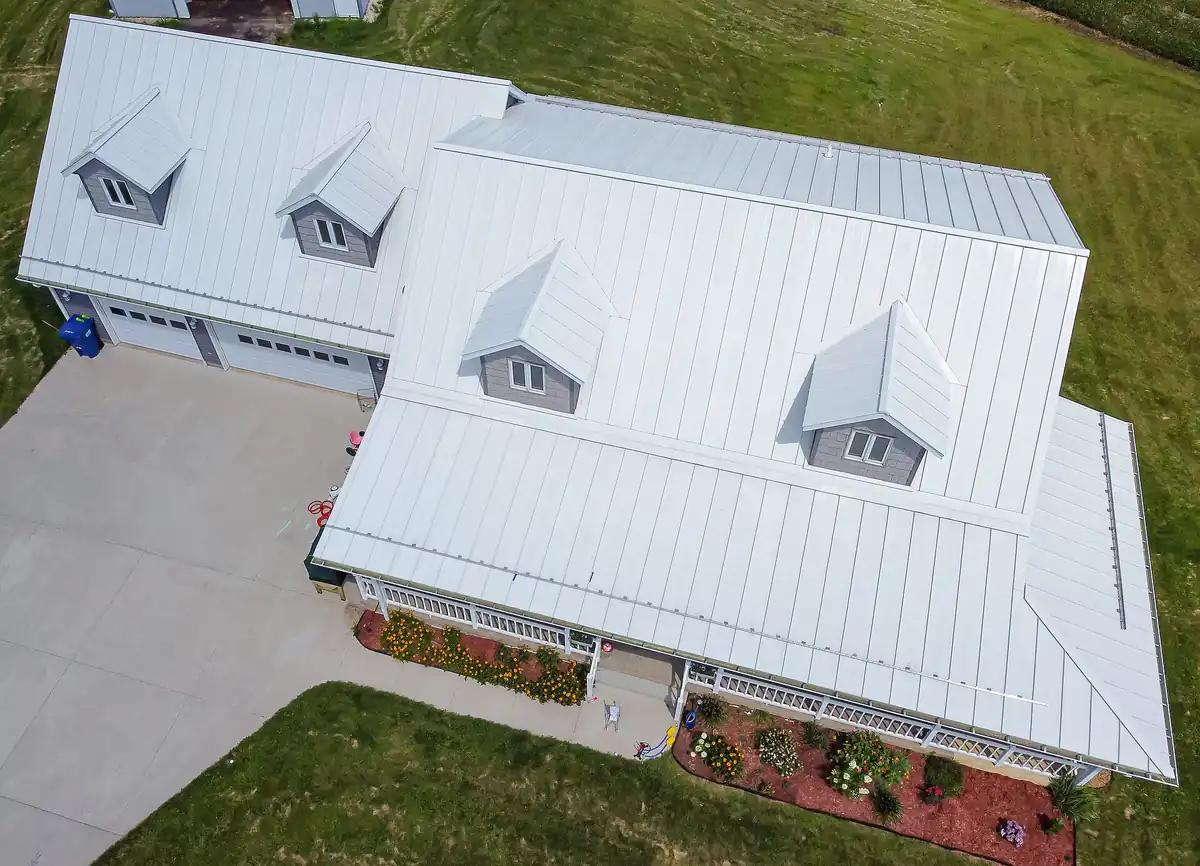
What makes a roof a cool roof?
What makes a roof a cool roof is two surface properties. Solar reflectance is the fraction of sunlight the surface reflects. Thermal emittance is how efficiently it gives off the heat it does absorb. The U.S. Department of Energy's guide to cool roofs explains that both are measured from 0 to 1, and higher values mean a cooler roof.[1] A white membrane has high values for both, while a dark asphalt shingle has low reflectance.
How much cooler does a cool roof stay?
A cool roof stays a lot cooler in strong sun. The Department of Energy's Energy Saver guide notes that standard roofs can reach 150°F or more in summer and that a cool roof can lower roof temperature by up to 50°F.[2] That temperature drop reduces heat moving into the attic and the rooms below. The DOE cool roof guide says that in warm or hot climates, a cool roof can reduce annual air-conditioning energy use of a single-story building by up to 15 percent.[1]
Where do cool roofs save the most energy?
Cool roofs save the most energy in hot, sunny climates, on buildings with large roof areas, and where ducts or living space sit right under the roof. In cold climates, a cool roof can slightly increase heating needs in winter, since it absorbs less of the sun's warmth. The DOE also notes that it is rarely economical to replace a sound roof just to make it more reflective; the best time is when the roof is due for replacement anyway.[1]
Does a cool roof have to be white?
A cool roof does not have to be white. Many products use special pigments that reflect near-infrared sunlight, which is invisible but carries much of the sun's heat. These "cool color" shingles, tiles, and metal finishes come in grays, browns, and other darker shades. A white roof is usually still the coolest because it reflects both visible and infrared light.[2]
What cool roof options exist for different roof types?
Cool roof options exist for most roof types: - Low-slope roofs: white TPO and PVC membranes, reflective coatings over foam or modified bitumen, and coated metal - Steep-slope roofs: reflective asphalt shingles, light-colored or cool-pigment clay and concrete tile, and painted metal - Existing roofs: reflective coatings can be applied to some low-slope roofs in good condition Ask for the rated reflectance and emittance of the exact product and color.
How do you compare the coolness of products?
To compare the coolness of products, look them up in the Cool Roof Rating Council's Rated Products Directory, which lists tested initial and three-year aged values for solar reflectance and thermal emittance.[3] Aged values show how the product performs after weathering and dirt, which is more realistic. Some codes and programs refer to a Solar Reflectance Index (SRI), a single number that combines both properties.
Do cool roofs help beyond your own house?
Cool roofs help beyond your own house by reducing the urban heat island effect, where dark roofs and pavement make cities warmer than surrounding areas. The U.S. EPA describes cool roofs as one strategy communities use to lower summer temperatures and reduce peak electricity demand.[4] Some cities and states encourage or require reflective roofs on certain buildings, such as California's energy code for some reroofs.
Should you choose a cool roof for your next replacement?
Whether to choose a cool roof depends on your climate, HOA rules, and roof type. In hot regions, it is often an easy upgrade at replacement time, especially on low-slope roofs. In mixed climates, cool-color shingles offer a middle ground. Ask your roofer to show the product's rated values and to check that attic ventilation and insulation are in good shape, since they also affect comfort.
Rather talk to someone? Request a callback
Leave your name and number and a local roofing contractor will call you back about a free estimate and inspection. Available to homeowners in our service markets.
- A local contractor calls you. They confirm your address and a time that works.
- They inspect your roof. Free, in person, no obligation.
- You get a written price. You decide. No pressure.
Frequently asked questions
Do cool roofs work in cold climates?
They work, but savings are smaller and winter heating needs can rise slightly. They pay off most in hot climates.
Can I make my existing roof a cool roof?
Some low-slope roofs in good condition can take a reflective coating. Steep-slope roofs usually go cool at replacement.
Are dark cool roofs as effective as white ones?
Cool-color products help, but white surfaces usually stay coolest because they reflect visible light too.
See 2026 roof replacement cost in your city →
Sources
- U.S. Department of Energy: Guidelines for Selecting Cool Roofs (PDF). www.energy.gov/sites/default/files/guide_to_cool_roofs.pdf
- U.S. Department of Energy: Energy Saver Guide (PDF). www.energy.gov/sites/default/files/2022-08/energy-saver-guide-2022.pdf
- Cool Roof Rating Council: Rated Products Directory. coolroofs.org/directory
- U.S. EPA: Using Cool Roofs to Reduce Heat Islands. www.epa.gov/heatislands/using-cool-roofs-reduce-heat-islands
Sources checked November 4, 2026. Estimates are not quotes. Roofing, insurance, and legal details vary. Confirm with your contractor, insurer, or attorney.