ENERGY STAR roof reflectivity: What happened to the label
Last updated · Energy & ventilation
Short answer: The ENERGY STAR roof products program ended on June 1, 2022, so new roofing products no longer carry the label. It certified roofs with high solar reflectance. Today, the Cool Roof Rating Council's Rated Products Directory is the main place to compare tested reflectance and emittance values for roofing products.[1]
What did the ENERGY STAR roof label measure?
The ENERGY STAR roof label measured solar reflectance, the share of sunlight a roof surface reflects. Under Version 3.0 of the specification, low-slope products needed an initial solar reflectance of at least 0.65 and at least 0.50 after three years of weathering. Steep-slope products needed at least 0.25 initially and 0.15 after three years.[2] Products had to be tested and listed to qualify.
Why did the ENERGY STAR roof program end?
The ENERGY STAR roof program ended because the EPA sunset the roof products category, effective June 1, 2022. The Cool Roof Rating Council announced the sunset and noted that its own directory would continue to provide rated values.[1] Old product literature and websites may still mention ENERGY STAR certification, but that label no longer applies to roofing.
How do you compare roof reflectivity now?
You compare roof reflectivity now by using the Cool Roof Rating Council's Rated Products Directory. It lists independently tested solar reflectance and thermal emittance for each product and color, with both initial and three-year aged values.[3] Aged values are more useful for comparison, since dirt and weathering lower reflectance over time. Search by manufacturer, product type, or color and compare the numbers side by side.
What is the difference between reflectance and emittance?
Reflectance and emittance are two separate properties. Solar reflectance is how much sunlight bounces off. Thermal emittance is how well the surface releases the heat it absorbs. A shiny bare metal roof can reflect well but have low emittance, so it holds heat. A white membrane does well on both. Some codes combine the two into the Solar Reflectance Index (SRI). The CRRC directory lists the values needed to compare all of them.
Can you still get a tax credit for a reflective roof?
You generally cannot get a federal tax credit for a reflective roof today. Starting in 2023, roofing was no longer listed as an eligible building envelope item under the federal Energy Efficient Home Improvement Credit, and that credit does not apply to property placed in service after December 31, 2025. Check the IRS credit page for current rules before you count on any tax benefit.[4] Some utilities and local programs still offer cool roof rebates, so check with your electric company.
Which roofs had the highest reflectivity?
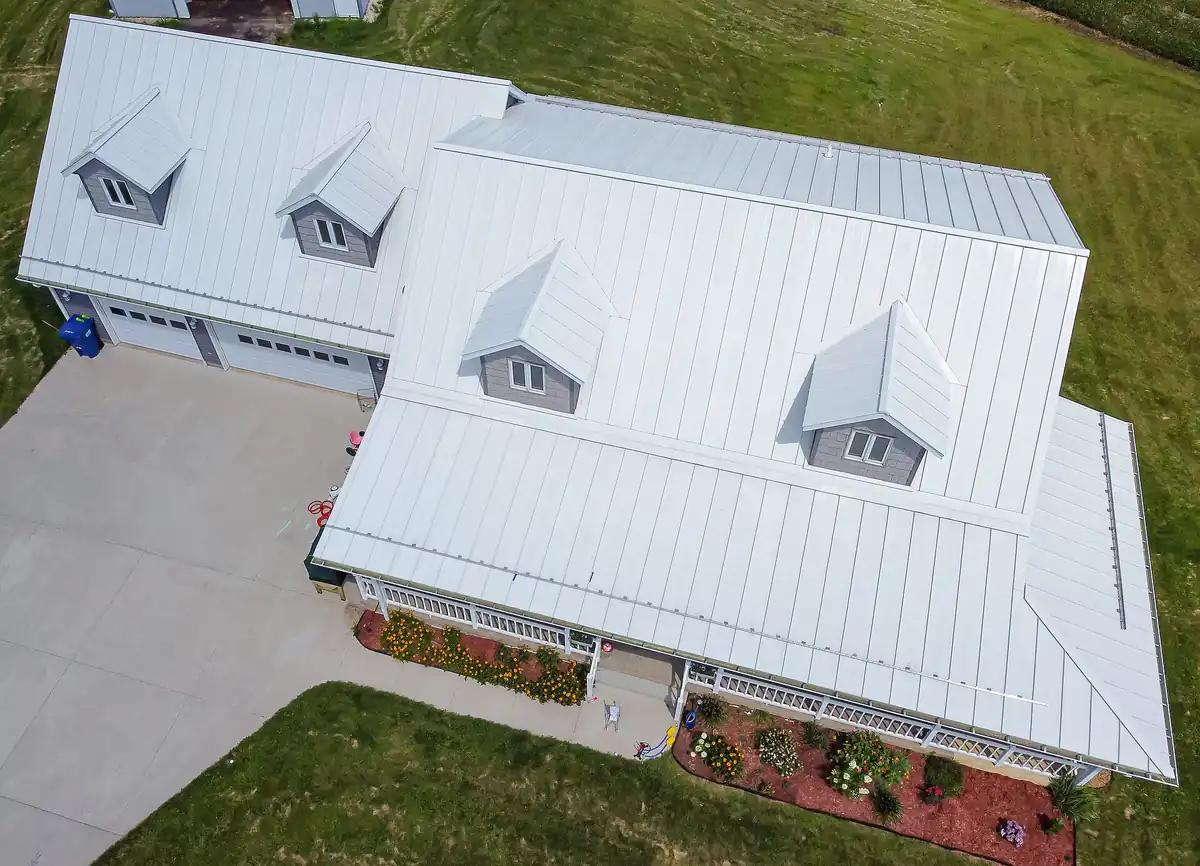
Roofs with the highest reflectivity are typically white single-ply membranes such as TPO and PVC, white elastomeric coatings, and light-colored painted metal. Steep-slope options with good reflectance include some light-colored and cool-pigment shingles, light-colored tile, and painted metal in cool colors. Reflectance varies by color within the same product line, so check the specific color.
Does reflectivity matter on every house?
Reflectivity matters most on houses in hot, sunny climates and on low-slope roofs with large exposed areas. On a steep-slope shingle roof over a well-insulated, well-ventilated attic, the effect on cooling bills is smaller. In cold climates, a highly reflective roof can slightly raise heating needs. Our guide on cool roofs explains where they pay off.
What should you ask a roofer about reflectivity?
Ask a roofer for the CRRC product ID and the rated initial and aged reflectance and emittance of the exact product and color they are quoting. If a salesperson says a product is ENERGY STAR certified, ask whether that is a current listing, since the program ended in 2022. If you are in a hot climate, ask about cool-color options and whether they cost more.
Rather talk to someone? Request a callback
Leave your name and number and a local roofing contractor will call you back about a free estimate and inspection. Available to homeowners in our service markets.
- A local contractor calls you. They confirm your address and a time that works.
- They inspect your roof. Free, in person, no obligation.
- You get a written price. You decide. No pressure.
Frequently asked questions
Are roofing products still ENERGY STAR certified?
No. The ENERGY STAR roof products program ended June 1, 2022.
Where can I find a roof's reflectance rating?
The Cool Roof Rating Council's Rated Products Directory lists tested values for many products and colors.
Does a reflective roof qualify for a federal tax credit?
Generally not. Roofing has not been an eligible item under the federal home improvement credit since 2023. Check the IRS site for current rules.
See 2026 roof replacement cost in your city →
Sources
- Cool Roof Rating Council: ENERGY STAR Roofing Program Sunsets. coolroofs.org/news/energy-star-roofing-program-sunsets
- ENERGY STAR: Roof Products Specification Version 3.0. www.energystar.gov/products/spec/roof_products_specification_version_3_0_pd
- Cool Roof Rating Council: Rated Products Directory. coolroofs.org/directory
- IRS: Energy Efficient Home Improvement Credit. www.irs.gov/credits-deductions/energy-efficient-home-improvement-credit
Sources checked November 4, 2026. Estimates are not quotes. Roofing, insurance, and legal details vary. Confirm with your contractor, insurer, or attorney.