Spray foam (SPF) roof recoating: When and why
Last updated · Flat, foam & low-slope roofs
Short answer: A spray foam (SPF) roof needs a protective coating because sunlight breaks down exposed foam. Recoating renews that layer before the foam is exposed. Signs it is time include worn or chalky coating, bare tan or brown foam, blisters, and bird pecks. With timely recoats, a foam roof can last for decades.[1]
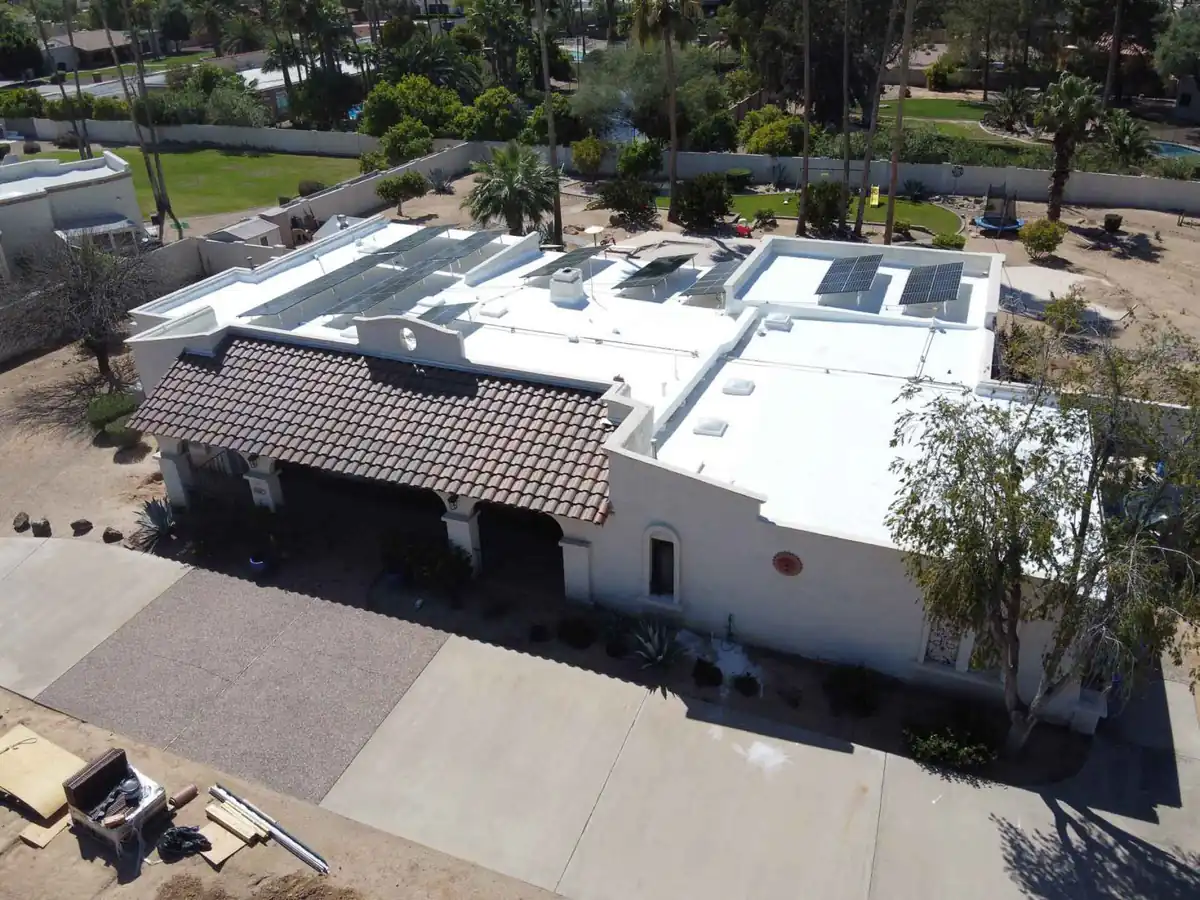
Why do spray foam roofs need a coating?
Spray foam roofs need a coating because polyurethane foam is damaged by ultraviolet light. Uncoated foam turns brown, then erodes and crumbles. The Spray Polyurethane Foam Alliance describes the elastomeric coating as the layer that protects the foam from UV and weather, while the foam provides insulation and the waterproof base.[1] The International Residential Code also requires spray foam roofs to be protected with a coating or covering applied per the manufacturer's instructions.[2]
How often does a foam roof need recoating?
How often a foam roof needs recoating depends on the coating type, its thickness, the climate, and foot traffic. Thicker coats last longer, and many coating warranties are tied to a specific thickness in mils. In hot, sunny places such as Arizona, coatings wear faster than in milder climates. A roofer can measure remaining coating thickness and tell you when the next recoat is due. Regular inspections, at least once a year and after big storms, catch wear early.
What are the signs it is time to recoat?
Signs it is time to recoat a foam roof include: - Coating that looks thin, chalky, or worn through in spots - Tan, brown, or orange foam showing through - Blisters or bubbles in the coating - Small holes from bird pecking or hail - Ponding areas where the coating has softened or worn - Cracks around drains, scuppers, and penetrations Catching these signs early keeps the job to a recoat instead of foam repair.
How does a foam roof recoat work?
A foam roof recoat starts with cleaning the roof, usually with a pressure wash at a setting safe for foam, and letting it dry. The crew repairs damaged foam by cutting out bad spots and filling them with new foam or sealant, then seals around penetrations. A primer may be applied if the coating system calls for it. The new coating goes on by spray or roller to the specified thickness, often with granules embedded in walkways for traction and durability.
Which coatings are used on spray foam roofs?
Coatings used on spray foam roofs include acrylic, silicone, and polyurethane systems. Acrylics are common and economical but can struggle with ponding water. Silicones resist ponding and UV but are best recoated with silicone. Polyurethane and polyurea coatings are tough and handle foot traffic well. The best choice depends on the existing coating, drainage, and budget, and on what the coating maker approves over the old surface.
What happens if you skip a recoat?
If you skip a recoat, the foam eventually becomes exposed and starts to degrade. Eroded foam loses thickness and insulation value, and water can get in at damaged spots. At that point, the repair grows from a recoat to removing and replacing damaged foam, which costs much more. In bad cases, the roof may need full replacement.
Can you walk on a foam roof?
You can walk on a foam roof carefully, but foot traffic wears the coating. Ask for walk pads or granule-embedded paths to HVAC units and other equipment. Avoid dragging tools or setting sharp objects on the foam. Ask HVAC technicians to stay on walkways. Our roof safety guide covers basic precautions.
How do you hire for a foam roof recoat?
To hire for a foam roof recoat, look for a contractor experienced with SPF and licensed for roofing in your state. In Arizona, check the license with the Registrar of Contractors.[3] Ask for the coating product name, the thickness in mils, how they will repair foam, and the warranty length tied to that thickness. Ask for photos before and after the work.
Rather talk to someone? Request a callback
Leave your name and number and a local roofing contractor will call you back about a free estimate and inspection. Available to homeowners in our service markets.
- A local contractor calls you. They confirm your address and a time that works.
- They inspect your roof. Free, in person, no obligation.
- You get a written price. You decide. No pressure.
Frequently asked questions
How long does a spray foam roof last?
With regular recoating and repairs, a foam roof can last for decades. Skipping recoats shortens its life.
Can a foam roof be recoated over itself?
Usually yes, after cleaning and repairs, with a coating compatible with the existing one.
Why is my foam roof turning brown?
Brown foam means the coating has worn off and UV is damaging the foam. Schedule a recoat soon.
See 2026 roof replacement cost in your city →
Sources
- Spray Polyurethane Foam Alliance: SPF Roofing Installation and Maintenance. www.sprayfoam.org/spf-roofing-installation-and-maintenance/
- 2021 International Residential Code, Chapter 9: Roof Assemblies. codes.iccsafe.org/content/IRC2021P2/chapter-9-roof-assemblies
- Arizona Registrar of Contractors: Contractor Search. azroc.my.site.com/AZRoc/s/contractor-search
Sources checked November 4, 2026. Estimates are not quotes. Roofing, insurance, and legal details vary. Confirm with your contractor, insurer, or attorney.