What is modified bitumen roofing?
Last updated · Flat, foam & low-slope roofs
Short answer: Modified bitumen is a roll roofing for flat and low-slope roofs made of asphalt blended with rubber-like or plastic modifiers and reinforced with fiberglass or polyester. It is installed in overlapping layers by torch, hot asphalt, cold adhesive, or self-adhesion. InterNACHI lists a typical life of about 20 years.[2]
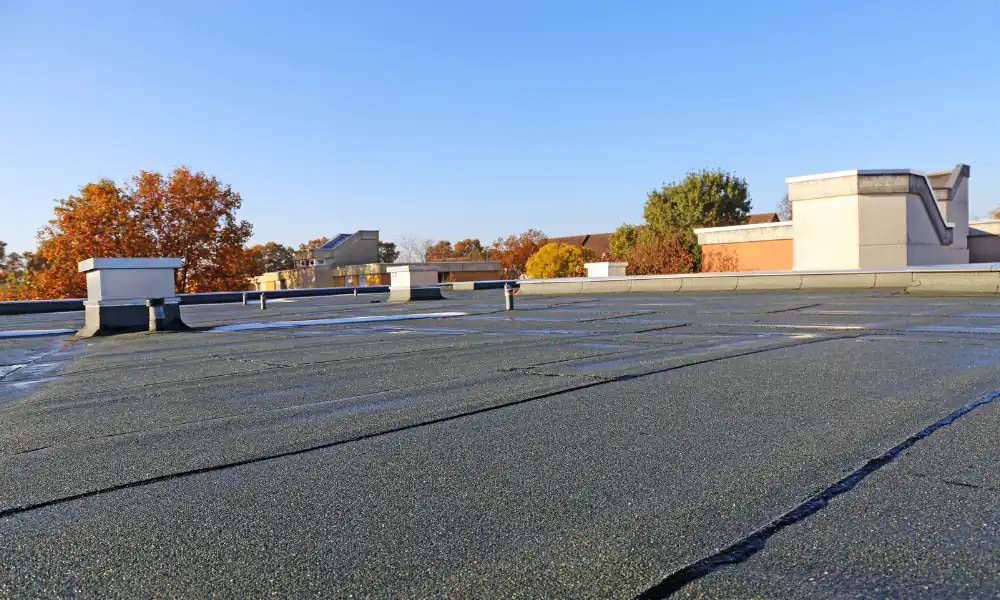
What is modified bitumen roofing made of?
Modified bitumen roofing is made of asphalt that has been modified with polymers to make it more flexible or more heat-resistant, then reinforced with a mat of fiberglass or polyester. The top surface is often covered with mineral granules for UV protection, or left smooth for a coating. The International Residential Code covers modified bitumen roofing for houses and lists the ASTM standards the sheets must meet.[1]
What is the difference between SBS and APP modified bitumen?
The difference between SBS and APP modified bitumen is the polymer. SBS (styrene-butadiene-styrene) is a rubber-like modifier that keeps the sheet flexible in cold weather and allows it to stretch with movement. APP (atactic polypropylene) is a plastic modifier that resists heat and UV and is usually torch-applied. SBS sheets can be torch-applied, set in hot asphalt, cold-applied with adhesive, or self-adhered, which gives more install options on homes.
How is modified bitumen installed?
Modified bitumen is installed in layers, typically a base sheet and a granule-surfaced cap sheet. Methods include: - Torch-applied: the back of the sheet is melted with a propane torch and pressed down - Hot-mopped: sheets are set in hot asphalt - Cold-applied: sheets are bonded with a solvent or adhesive - Self-adhered: sheets have a sticky back with a release film Seams overlap and are heat-welded or sealed. Flashing at walls, curbs, and drains uses the same material.
Is torch-down roofing safe on a house?
Torch-down roofing can be done safely on a house by trained crews, but open flame on a roof carries fire risk, especially near wood edges, vents, and attic openings. The National Roofing Contractors Association offers torch safety training programs for roofers.[3] Many residential roofers prefer self-adhered or cold-applied systems for that reason. Ask how the crew will manage fire safety if a torch will be used.
What slope does modified bitumen need?
Modified bitumen needs at least a minimal slope for drainage. The IRC sets a minimum slope of one-quarter inch per foot (1/4:12) for modified bitumen roofs.[1] Flat roofs that hold water in puddles for days wear faster, so tapered insulation, crickets, or added drains can improve drainage during a replacement.
How long does modified bitumen last?
Modified bitumen lasts about 20 years on average, according to InterNACHI's life expectancy chart.[2] Life depends on the number of plies, the quality of flashing, drainage, and maintenance. A reflective coating or granule surface protects the asphalt from UV. Regular inspections of seams and flashings, especially after storms, help catch problems early.
How does modified bitumen compare with TPO?
Modified bitumen compares with TPO in a few ways. Modified bitumen is thicker and multi-layered, resists punctures and foot traffic well, and is familiar to many residential roofers. TPO is a single-ply membrane with heat-welded seams and a white, reflective surface that keeps roofs cooler in sun. Both are common on homes with flat or low-slope sections. Our TPO guide explains that option.
What should a modified bitumen bid include?
A modified bitumen bid should include the type (SBS or APP), number of plies, install method, base sheet and cap sheet products, insulation and tapered sections, flashing details, and any coating. Ask whether the old roof will be removed and the deck inspected. Make sure drains and scuppers are addressed, since they are common leak points.
Rather talk to someone? Request a callback
Leave your name and number and a local roofing contractor will call you back about a free estimate and inspection. Available to homeowners in our service markets.
- A local contractor calls you. They confirm your address and a time that works.
- They inspect your roof. Free, in person, no obligation.
- You get a written price. You decide. No pressure.
Frequently asked questions
Is modified bitumen the same as rolled roofing?
Not quite. Basic rolled roofing is a single, thinner layer. Modified bitumen is a polymer-modified, reinforced membrane often installed in two plies.
Can modified bitumen be coated?
Yes. Reflective coatings can protect it from UV and lower roof temperatures.
Is modified bitumen good for a flat porch roof?
It is a common choice for low-slope porch and addition roofs, installed with proper slope and flashing.
See 2026 roof replacement cost in your city →
Sources
- 2021 International Residential Code, Chapter 9: Roof Assemblies. codes.iccsafe.org/content/IRC2021P2/chapter-9-roof-assemblies
- InterNACHI, Standard Estimated Life Expectancy Chart. www.nachi.org/life-expectancy.htm
- National Roofing Contractors Association. www.nrca.net/
Sources checked November 4, 2026. Estimates are not quotes. Roofing, insurance, and legal details vary. Confirm with your contractor, insurer, or attorney.