Roof coating vs roof replacement: Which does your roof need?
Last updated · Flat, foam & low-slope roofs
Short answer: A roof coating can extend the life of a low-slope roof that is still watertight, with a dry deck and insulation and only surface wear. If the roof leaks in many places, has wet insulation, or the membrane is failing, replacement is the better choice. Coatings are mainly for flat and low-slope roofs, not shingle roofs.[1]
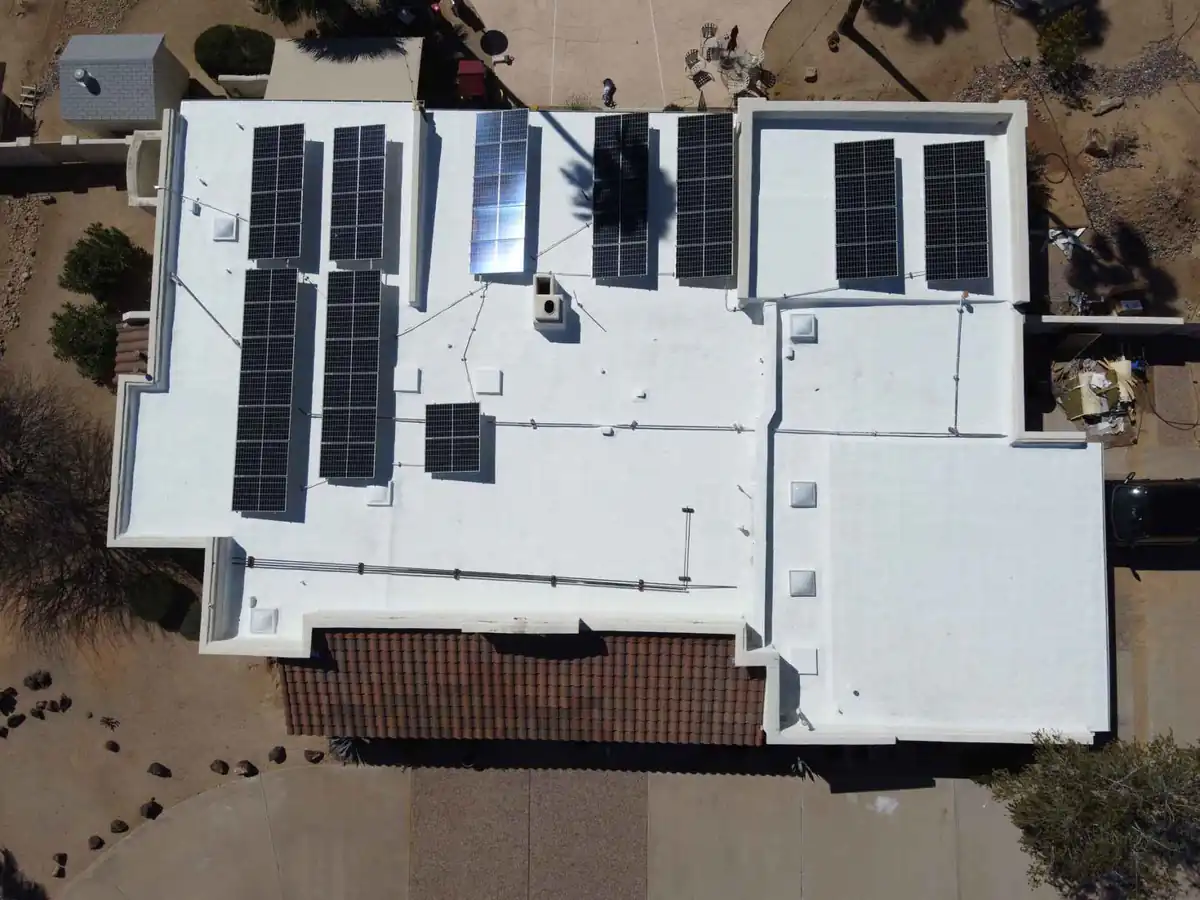
What does a roof coating do?
A roof coating adds a fluid-applied layer over an existing low-slope roof that cures into a seamless film. It protects the roof from sun, weather, and minor leaks at seams, and many coatings are white or reflective, which keeps the roof cooler. The Roof Coatings Manufacturers Association describes coatings as a way to protect and extend the service life of existing roofs.[1] A coating does not fix structural problems or soaked insulation underneath.
When is a coating a good fit?
A coating is a good fit when the existing roof is mostly sound. Good candidates have: - A membrane or surface that is intact, with wear rather than splits or large blisters - Dry insulation and decking, confirmed by inspection - Good drainage without large areas of standing water (or a coating rated for ponding) - A few leaks at seams or flashings that can be repaired before coating Coatings are common on spray foam, metal, modified bitumen, and single-ply roofs.
When is replacement the better choice?
Replacement is the better choice when water has gotten into the roof system. Wet insulation loses its value, adds weight, and can rot the deck, and coating over it traps the moisture. Replacement also makes sense when the membrane is shrinking, splitting, or delaminating across the roof, when there are already multiple roof layers, or when the deck is soft. A roof near the end of its life with many leaks rarely benefits from a coating.
How do roofers check for wet insulation?
Roofers check for wet insulation in a few ways. An infrared scan, done in the evening after a sunny day, shows wet areas that hold heat longer. Moisture meters and small core cuts confirm what the scan shows. On a smaller residential roof, a roofer may simply cut a few test cores near drains, seams, and past leak spots. Wet areas can sometimes be cut out and replaced before a coating goes on.
What types of roof coatings are there?
Common types of roof coatings include acrylic, silicone, polyurethane, and asphalt-based products. Acrylics are water-based and cost less but do not handle ponding water well. Silicones hold up in ponding water and UV but can be harder to recoat with other products. Polyurethanes are tough and resist foot traffic. Aluminum asphalt coatings have been used for decades on built-up and modified roofs; InterNACHI's life expectancy chart lists aluminum coatings at 3 to 7 years.[2] The right one depends on the existing roof and drainage.
Do coatings save energy?
Coatings can save energy when they are white or reflective, since they lower the roof surface temperature in sun. The U.S. EPA lists coatings as one way to create a cool roof on an existing low-slope building.[3] The savings are largest in hot climates and on buildings where the space under the roof is air-conditioned.
Can you coat a shingle roof?
You generally should not coat an asphalt shingle roof. Shingles shed water by overlapping, and a coating can seal the laps and trap moisture. Many shingle manufacturers say coatings void their warranty. A few products are marketed for shingles, but the safer path for a worn shingle roof is repair or replacement.
What should you ask before choosing a coating?
Before choosing a coating, ask how the roofer confirmed the insulation is dry, which repairs will happen first, what coating product and thickness (in mils) they will apply, and whether the coating carries a manufacturer warranty tied to that thickness. Ask how often it will need recoating. Compare the cost with a replacement bid, since a coating on a roof that needs replacing just delays the bigger job.
Rather talk to someone? Request a callback
Leave your name and number and a local roofing contractor will call you back about a free estimate and inspection. Available to homeowners in our service markets.
- A local contractor calls you. They confirm your address and a time that works.
- They inspect your roof. Free, in person, no obligation.
- You get a written price. You decide. No pressure.
Frequently asked questions
How long does a roof coating last?
It depends on the product and thickness. Some coatings are designed to be renewed every several years, and longer warranties require thicker coats.
Can a coating stop a roof leak?
It can seal minor seam leaks after repairs, but leaks from wet insulation or failed flashing need repair first.
Is coating cheaper than replacement?
Usually, when the roof is a good candidate. It is money poorly spent on a roof with widespread wet insulation.
See 2026 roof replacement cost in your city →
Sources
- Roof Coatings Manufacturers Association. www.roofcoatings.org/
- InterNACHI, Standard Estimated Life Expectancy Chart. www.nachi.org/life-expectancy.htm
- U.S. EPA: Using Cool Roofs to Reduce Heat Islands. www.epa.gov/heatislands/using-cool-roofs-reduce-heat-islands
Sources checked November 4, 2026. Estimates are not quotes. Roofing, insurance, and legal details vary. Confirm with your contractor, insurer, or attorney.