How long does tile roof underlayment last in Arizona?
Last updated · Tile roofs
Short answer: In Arizona, tile roof underlayment wears out decades before the tile does, because heat dries out and cracks asphalt-based felt. The tile itself can last more than a century, but leaks start when the underlayment fails. Replacing it through a refelt, with tiles lifted and relaid, is the usual fix.[2]
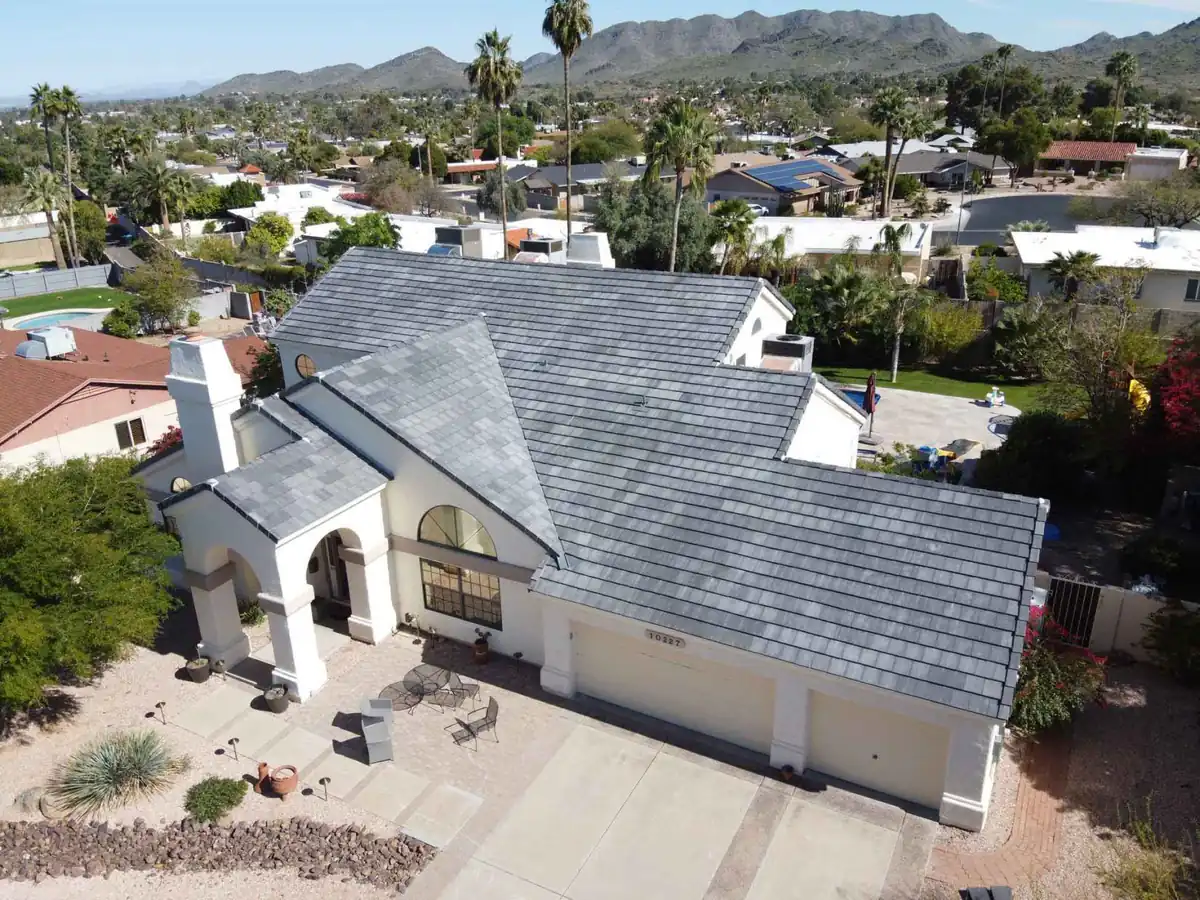
Why does tile underlayment wear out faster in Arizona?
Tile underlayment wears out faster in Arizona because of heat and sun. The air space under tile gets very hot in summer, and the underlayment sits right in it. Older asphalt-saturated felt loses oils over time, becomes brittle, and cracks, especially where sun reaches it through gaps at ridges, edges, and broken tiles. Monsoon storms then drive water past the tile onto that worn layer. The Tile Roofing Industry Alliance publishes guidance on underlayments and installation for tile in different climates.[1]
How long does the tile itself last?
The tile itself lasts far longer than the underlayment. On InterNACHI's chart of typical component lifespans, clay and concrete tile are listed at 100-plus years.[2] That gap is why tile roofs need work long before the tile is worn out. A homeowner with a 25-year-old tile roof may have tiles in good shape and underlayment near the end of its life.
What are the signs that underlayment is failing?
Signs that underlayment is failing include: - Water stains on ceilings, often after monsoon rain - Daylight or dark, brittle felt visible from the attic - Felt that crumbles when touched at the eaves - Slipped or cracked tiles exposing the layer below - Repeated leaks in different spots A roofer can lift a few tiles to look at the underlayment directly, which is the only way to judge it fully.
What is a refelt?
A refelt is the repair that replaces failed underlayment on a tile roof. The crew removes and stacks the tiles, tears off the old underlayment, repairs any damaged decking, installs new underlayment and flashing, and relays the tiles, replacing broken ones. Our refelt guide goes through the steps and costs to expect.
Which underlayments last longer?
Underlayments that last longer in heat include heavier felts, modified-bitumen underlayments, and high-temperature synthetic underlayments rated for use under tile. The International Residential Code sets minimum underlayment requirements and requires a double layer on tile roofs with slopes under 4:12.[3] Many roofers use two layers or a premium product on all tile roofs in Arizona. Ask for the product name and its temperature rating, and whether it is approved by the tile maker.
Does the roof slope affect underlayment life?
Roof slope does affect underlayment life. Low-slope tile roofs shed water more slowly, so more water reaches the underlayment, and they need the extra underlayment layer that code requires. Valleys, the areas around skylights, and transitions to flat roof sections carry more water and often fail first. A roofer may suggest heavier materials in those spots.
Can you patch tile underlayment instead of a full refelt?
You can patch tile underlayment in limited spots. A partial refelt of one slope or one valley can fix a local problem when the rest of the roof is in good condition. If the underlayment is brittle everywhere, patching one area may just move the leak to the next weak spot. Ask the roofer to show you photos of the underlayment in several areas before deciding.
How do you hire for a tile refelt in Arizona?
To hire for a tile refelt in Arizona, use a contractor licensed by the Arizona Registrar of Contractors and check the license and complaint history with the ROC's online search.[4] Ask for a written scope that lists the underlayment product, number of layers, flashing replacement, the number of replacement tiles included, and the warranty. Our licensing page links to state lookups.
Rather talk to someone? Request a callback
Leave your name and number and a local roofing contractor will call you back about a free estimate and inspection. Available to homeowners in our service markets.
- A local contractor calls you. They confirm your address and a time that works.
- They inspect your roof. Free, in person, no obligation.
- You get a written price. You decide. No pressure.
Frequently asked questions
How do I know if my tile roof needs a refelt?
Repeated leaks, brittle felt seen from the attic, and slipped tiles are common signs. A roofer can lift tiles to confirm.
Can my old tiles be reused in a refelt?
Usually yes. Most tiles are reused, and broken ones are replaced with matching tiles.
Is synthetic underlayment better for tile in Arizona?
High-temperature synthetic and modified underlayments are made to handle heat. Ask for one approved for use under tile.
Sources
- Tile Roofing Industry Alliance: Resources. www.tileroofing.org/resources.html
- InterNACHI, Standard Estimated Life Expectancy Chart. www.nachi.org/life-expectancy.htm
- 2021 International Residential Code, Chapter 9: Roof Assemblies. codes.iccsafe.org/content/IRC2021P2/chapter-9-roof-assemblies
- Arizona Registrar of Contractors: Contractor Search. azroc.my.site.com/AZRoc/s/contractor-search
Sources checked November 4, 2026. Estimates are not quotes. Roofing, insurance, and legal details vary. Confirm with your contractor, insurer, or attorney.